Eyebrow hair transplant.

A surgical brow restoration combining Dr. Peterson's FUE training, Orr Swissa-Amran's medical execution, and Ruth Swissa's 25 years of eyebrow shape design.

Calabasas procedure suite · pre-case
In short· What is an eyebrow hair transplant

A surgical procedure that restores brow density by harvesting individual hair follicles from a donor area on the scalp and implanting them into the brow at the angle and depth a brow follicle would naturally grow. The default technique for brows is Follicular Unit Extraction (FUE) — small graft counts, no linear donor scar, faster recovery than older strip methods. Typical case: 150 to 400 grafts per brow. Result is permanent and grows like scalp hair: continuous, trim-and-style maintenance for life.

What we built

A three-discipline procedure, run as one.

An eyebrow hair transplant is conventionally framed as a surgical procedure. It is — the harvest, the implantation, the anesthesia, the recovery, all of that is surgery. But what determines whether a result looks like a credible brow or like a row of scalp hair on a face is not surgical technique alone. It is the shape decision made before the first graft is placed.

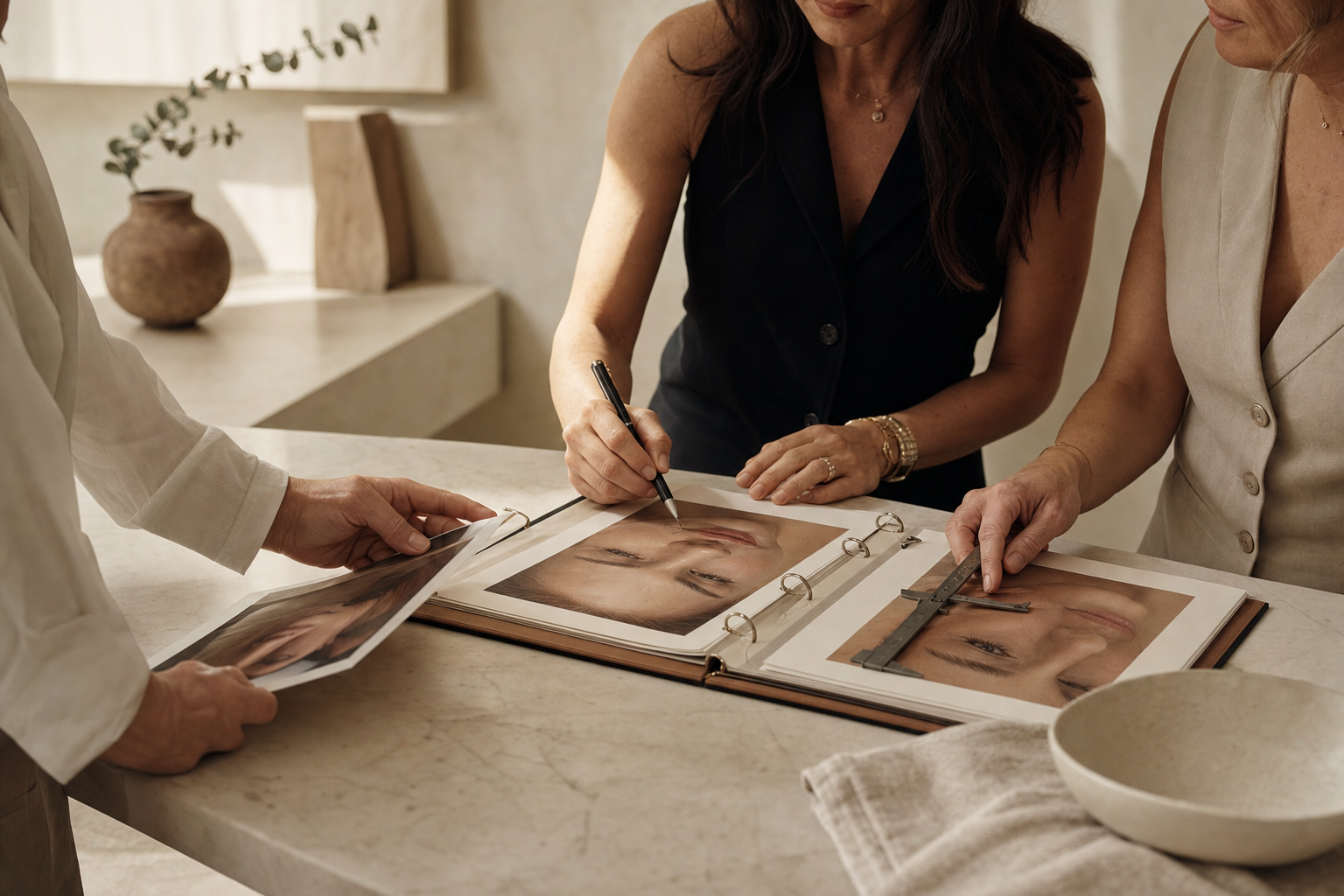
We built this service deliberately as a three-part collaboration. Dr. Charles Peterson brings the FUE training and the surgical decision-making. Orr Swissa-Amran, PA-C, executes the harvesting and implantation under his supervision. Ruth Swissa — twenty-five years of eyebrow shape design at the paramedical studio next door — owns the design of the brow itself. Most surgical hair restoration practices do not have that third seat at the table. Ours does.

The result is a procedure planned in the same room by surgeon, medical executor, and brow designer. The shape decision is not delegated to a hand-drawing the morning of surgery. Symmetry, ethnic appropriateness, growth direction zone-by-zone, density target by region — all of that is decided before anyone reaches for an extraction punch.
The team

Surgical precision · medical execution · artistic refinement.

Facial balancing

Dr. Charles Peterson

Board-certified Family Medicine physician

Board-certified Family Medicine physician with nearly a decade of experience in aesthetic medicine. Medical Director for multiple medical spas throughout California, and founder and Medical Director of Swissa Med Spa. His focus is comprehensive facial balancing — harmonious, natural-looking results that enhance each patient's unique features.

Medical execution

Orr Swissa-Amran, PA-C

Board-certified Physician Associate

UCLA undergrad; Master of Physician Assistant Studies at Mercy University, New York; competitive surgical residency at Albert Einstein College of Medicine / Montefiore Medical Center. Specialized training in eyebrow hair transplantation under the supervision of Dr. Charles Peterson, plus additional advanced education and international training in South Korea focused on hair restoration and aesthetic medicine.

Artistic refinement

Ruth Swissa, CMM

25+ years · eyebrow shaping and facial aesthetics

Eyebrow hair transplantation at Swissa Med Spa is uniquely refined through her artistic expertise — combining Dr. Peterson's surgical precision and Orr Swissa-Amran's medical execution with Ruth's meticulous understanding of eyebrow structure, hair growth patterns, facial balance, ethnicity, and shape design.

Meet the full team
Technique

FUE is the default for brows.

Two surgical techniques exist for hair restoration. Dr. Peterson is trained in both at the Saint Louis University Department of Surgery and School of Medicine.

Linear Strip Excision (LSE / FUT) removes a thin strip of donor scalp and dissects out individual follicular units under microscopy. It is efficient for very high graft counts and remains a defensible choice for scalp restoration. It leaves a fine linear donor scar that is concealed by surrounding hair.

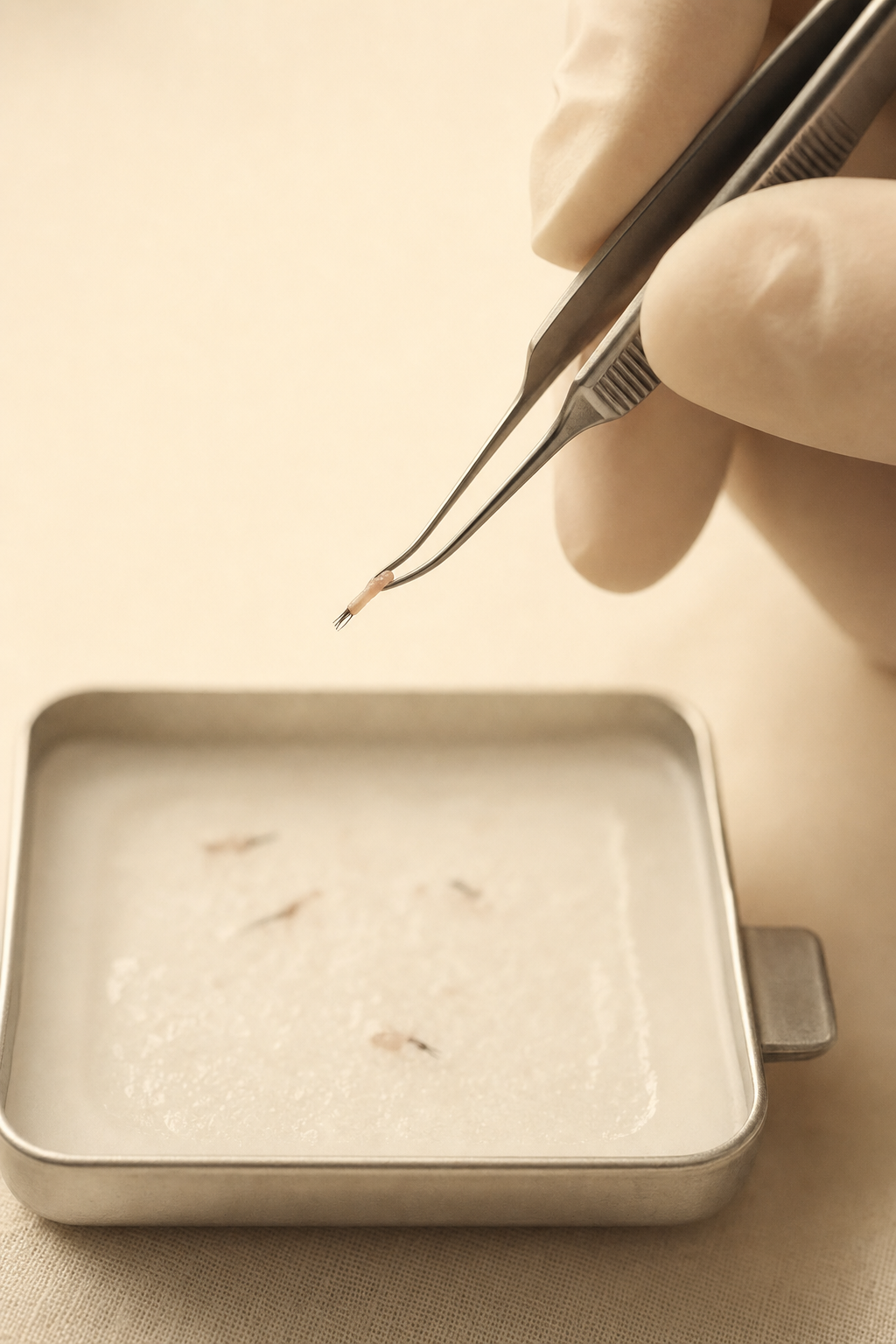
Follicular Unit Extraction (FUE) harvests individual follicles one at a time with a small rotary punch. There is no linear scar; donor recovery is faster; the small per-follicle wounds heal as tiny round marks that disappear into surrounding hair within weeks. For brows, where graft counts are small (150 – 400 per brow) and patients want the fastest path back to normal life, FUE is the right default. We say so up front.

We offer LSE / FUT context here for completeness — patients sometimes ask about it because they have read about it elsewhere. For an eyebrow transplant specifically, we recommend FUE in nearly every case.

Single FUE graft · prepared for implantation
Procedure outline

What happens on the day.

A typical case runs four to six hours, single visit, local anesthesia. You are awake. You can listen to music. Lunch is brought in.

  1. 01

    Pre-operative review and shape lock.

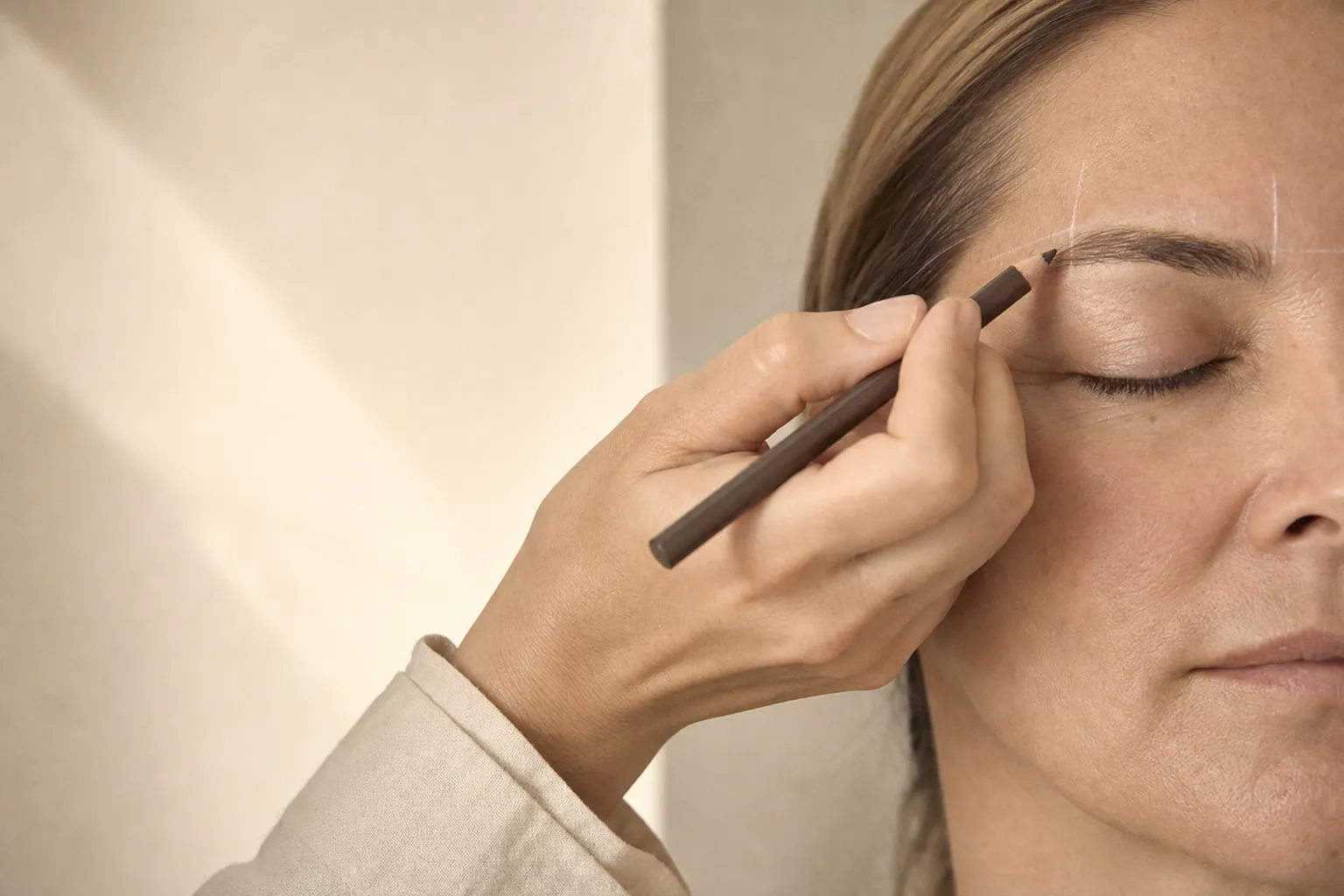
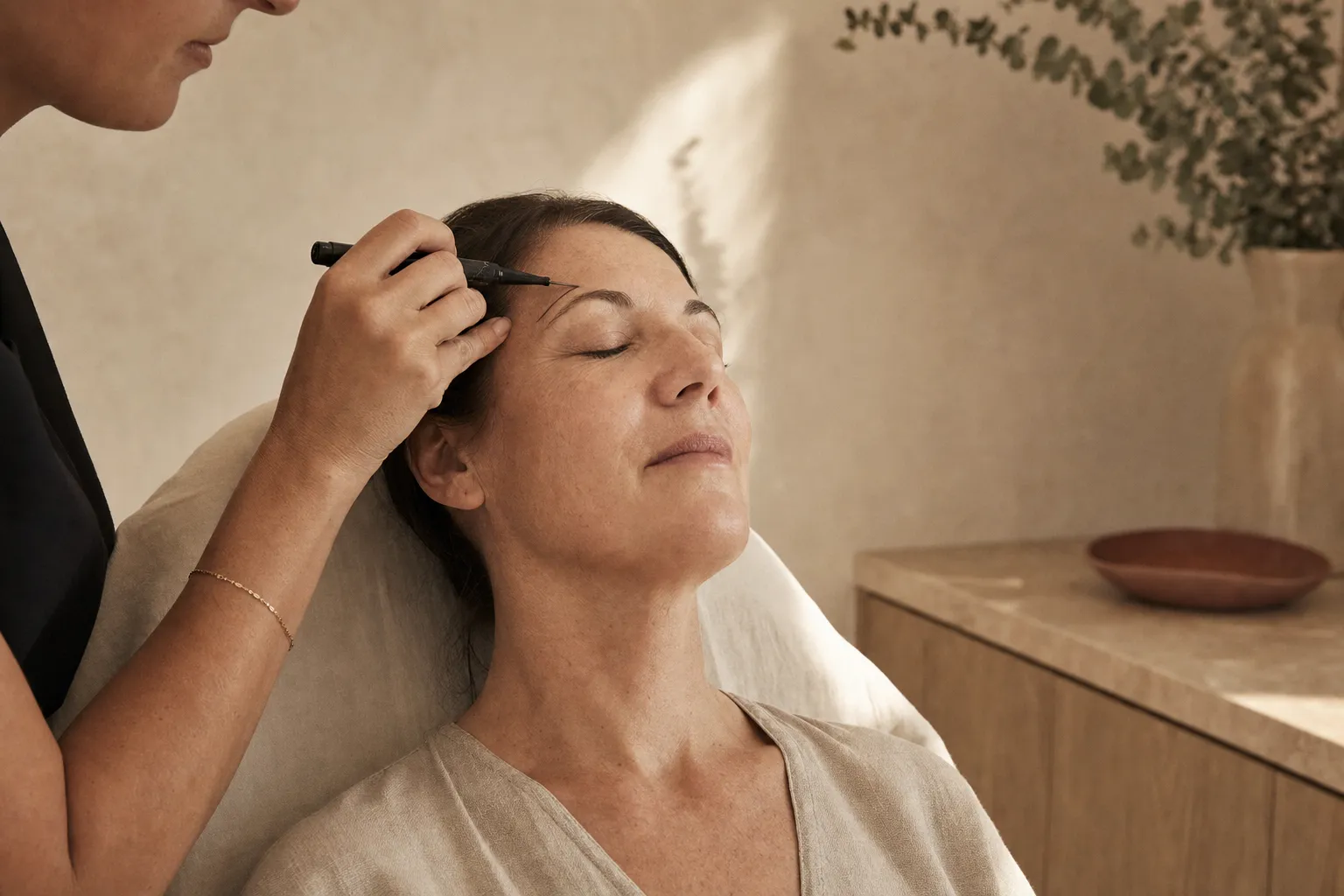
    The brow shape was designed across one or two prior consultations and confirmed in photographs. On the morning of, we re-confirm the outline on your face with a fine surgical marker, you review it in a mirror, and we adjust until you sign off. After that point the outline does not change.

  2. 02

    Donor area preparation.

    A small donor zone on the scalp — usually at the nape or behind the ear — is trimmed short, cleaned, and locally anesthetized. The total donor footprint for a 150 – 400 graft case is small; it is not visible once surrounding hair grows back over the next several weeks.

  3. 03

    FUE harvest.

    Dr. Peterson and Orr Swissa-Amran extract individual follicular units one at a time using a small motorized punch. Each follicle is placed immediately into a chilled holding solution that maintains viability. The harvest is the longest part of the day — typically two to three hours.

  4. 04

    Recipient site creation.

    Tiny incisions are made along the planned brow outline, each one at the angle and depth a brow follicle would naturally grow — flatter than scalp hair, with growth direction varying across the brow (medial head pointing up, body sweeping laterally, tail flowing downward). This is the step where artistry meets anatomy. Ruth is in the room.

  5. 05

    Implantation.

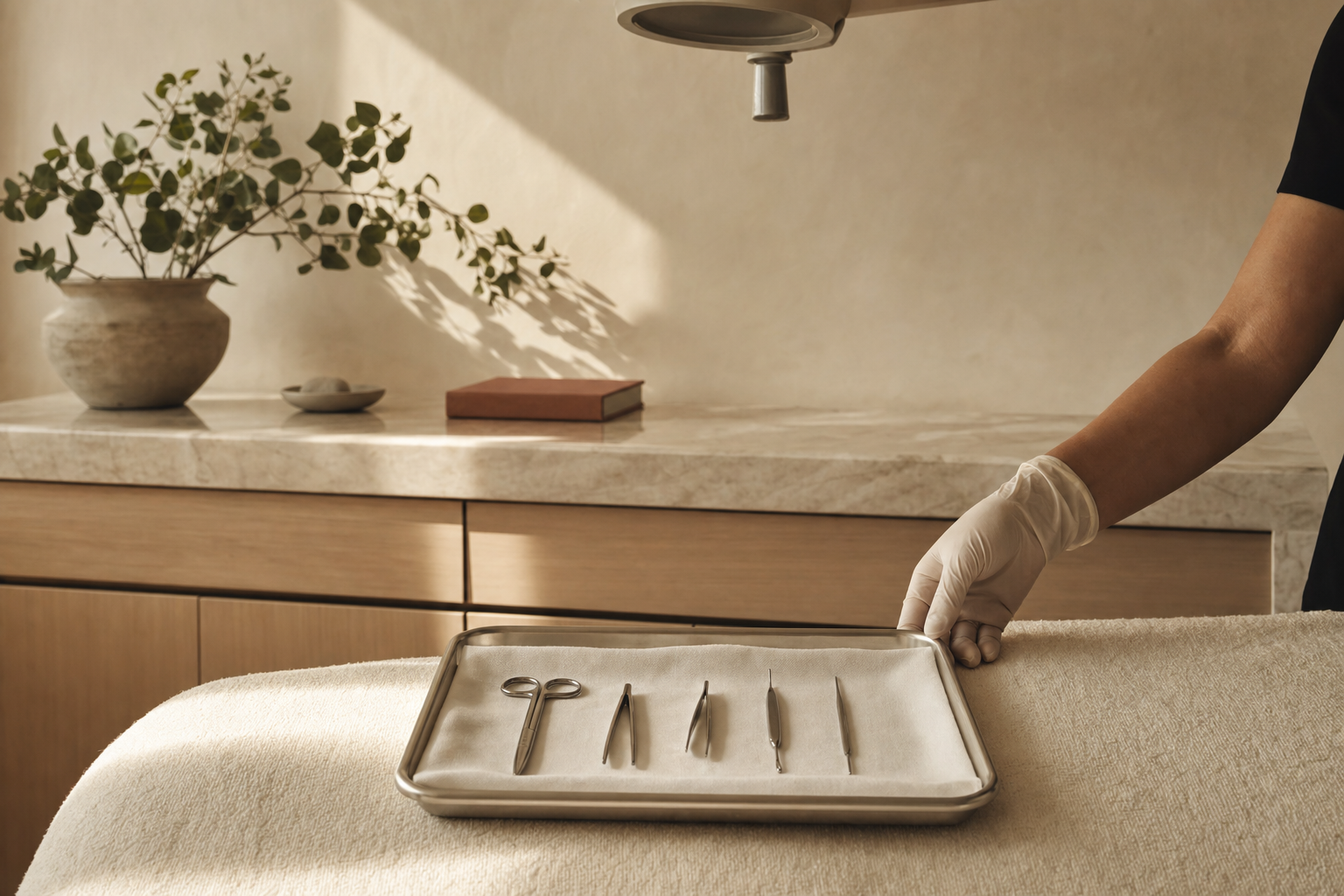
    Each graft is placed into a recipient site, one at a time, with fine forceps. Graft selection — single-hair versus two-hair units — is matched to the location: single-hair grafts at the leading edge for a soft transition, two-hair units in the body for density.

  6. 06

    Post-operative dressing and discharge.

    A light dressing is placed over the donor area; the brow itself is left open to air with detailed aftercare instructions. You go home the same day, accompanied by someone able to drive. Recovery proper begins that evening.

Pre-operative shape design · one file, three signatures
Realistic outcomes

What three honest answers sound like.

First: graft survival. The published range for FUE in trained hands is 80 to 95 percent. We plan graft counts with that range built in. A brow planned to a final density target of 300 grafts is typically implanted with 320 to 350 to absorb expected loss. We do not promise 100 percent survival because the literature does not support it.

Second: shock loss. Around weeks four to eight, the transplanted hairs fall out. This is normal, expected, and not a failure of the procedure. The follicles themselves are intact below the surface; they are simply resetting into a new growth cycle.

Third: the final result is at month twelve. Visible regrowth starts at month three. The brow looks credible at month six. The final, settled, full-density result is at month twelve — one complete hair growth cycle from the date of surgery. Touch-up density passes, if needed, are typically scheduled at month twelve based on the actual outcome rather than predicted.

Posture

"Specialized expertise, deliberately limited capacity. We do not run high case volumes; we run cases we believe in, designed in the same room by the people who will perform them."

We will not perform
  • Active autoimmune disease affecting hair follicles (alopecia areata, scarring alopecia) without a stability period and dermatology coordination.
  • Pregnancy or active breastfeeding — no elective surgery.
  • Active uncontrolled bleeding disorder or full-dose anticoagulation without prescriber clearance.
  • Patients within six months of isotretinoin (Accutane).
  • Patients seeking an eyebrow shape that violates anatomic plausibility for their face — we say no, kindly, and design a shape we can build instead.
Available at

Where eyebrow hair transplant is performed.

Offered
Calabasas
Tuesday – Saturday
Visit Calabasas
Not offered
Beverly Hills
Performed at Calabasas, 10 mi north
Visit Calabasas

Our Beverly Hills satellite operates Wednesdays by appointment and performs injectables only. Lasers, regenerative protocols, medical weight loss and wellness are at our Calabasas studio.

FAQ

Questions we get.

How many grafts will I need?

Typical brow cases run 150 to 400 grafts per brow. The exact count depends on existing density, target shape, and how much edge-versus-body work the plan calls for. The graft count is locked at consultation, not on the day of surgery.

What is shock loss?

Around weeks four to eight, the transplanted hairs fall out. This is normal and expected. The follicles themselves are intact below the surface and re-enter growth phase shortly after.

Can I do this in Beverly Hills?

No. The procedure is performed only at our Calabasas studio. Beverly Hills is a satellite for injectables. Calabasas is ten miles north — a 25 to 35 minute drive off-peak.

What is the graft survival rate?

The published range for FUE in trained hands is 80 to 95 percent. We plan graft counts with that range built in — a brow targeting a final density of 300 grafts is typically implanted with 320 to 350.

Is it permanent?

Yes. The transplanted follicles are real hair follicles with their own blood supply once they engraft. They grow on their own schedule — like scalp hair — for the rest of your life. You will trim them.

What is the difference between FUE and FUT / LSE?

FUE (Follicular Unit Extraction) harvests follicles one at a time with no linear scar. FUT / LSE (Linear Strip Excision) removes a strip of donor tissue and dissects out follicles under microscopy. For eyebrows specifically, FUE is the right default — smaller graft counts, no linear donor scar, faster recovery. Dr. Peterson is trained in both.

How does this compare with microblading?

Microblading is a paramedical tattoo with a one- to three-year lifespan and 24 hours of downtime. An eyebrow transplant is permanent surgical follicle restoration with 7 to 14 days of visible recovery. Detailed comparison at /blog/eyebrow-hair-transplant-vs-microblading/.

How long is the final result?

Twelve months from the date of surgery — one full hair growth cycle. Visible regrowth starts around month three; the brow looks credible at month six. Final density and shape are evaluated at month twelve.

From our sister studio

Swissa Med Spa shares a building, a clinical team and a thirty-year history with Ruth Swissa, the paramedical tattooing practice.

For the pigment-based alternative, see microblading at Ruth Swissa. For alopecia-pattern brow loss, see alopecia tattooing at Ruth Swissa.
Booking

Schedule a consultation for eyebrow hair transplant.

(818) 735‑8818
Tue – Sat · 9 a.m. – 5 p.m.