Recovery after an eyebrow hair transplant.
Day-by-day what to expect after an eyebrow hair transplant. Scabbing, shock loss, regrowth, the twelve-month timeline.
The visible recovery is seven to fourteen days — pinpoint scabbing at each implanted site, mild swelling for the first two to three days, and pinkness that fades through the second week. Around weeks four to eight the transplanted hairs fall out (shock loss — expected and not a failure). Visible regrowth starts at month three; the brow looks credible at month six; the final settled result is at month twelve, after one complete hair growth cycle.
Day-by-day, plainly.
We give you a printed timeline at discharge. Here is the same timeline as you would read it before deciding to schedule.
- 01
Day 0 — the evening of surgery.
Mild tightness and pinkness across the brows and at the donor site on the scalp. Numbing wears off over a few hours. Over-the-counter pain control is typically sufficient. You should not drive yourself home.
- 02
Days 1 – 3 — mild swelling.
Some patients have mild swelling across the forehead and around the eyes; some have none. Cold compresses on the forehead (not directly on the brows) help. Sleeping with the head slightly elevated for the first two nights is recommended.
- 03
Days 3 – 7 — pinpoint scabbing.
Each implanted graft develops a tiny scab. Hands off — do not pick, do not scratch. We provide a gentle saline spray to mist the brows several times a day to keep the scabs soft.
- 04
Days 7 – 14 — scabs release.
Scabs release naturally over the second week. The brows look pink underneath as the surface heals. By day fourteen, most patients can return to public life without anyone noticing recent surgery. Light eyebrow makeup is generally permitted around day ten — exact timing per discharge instructions.
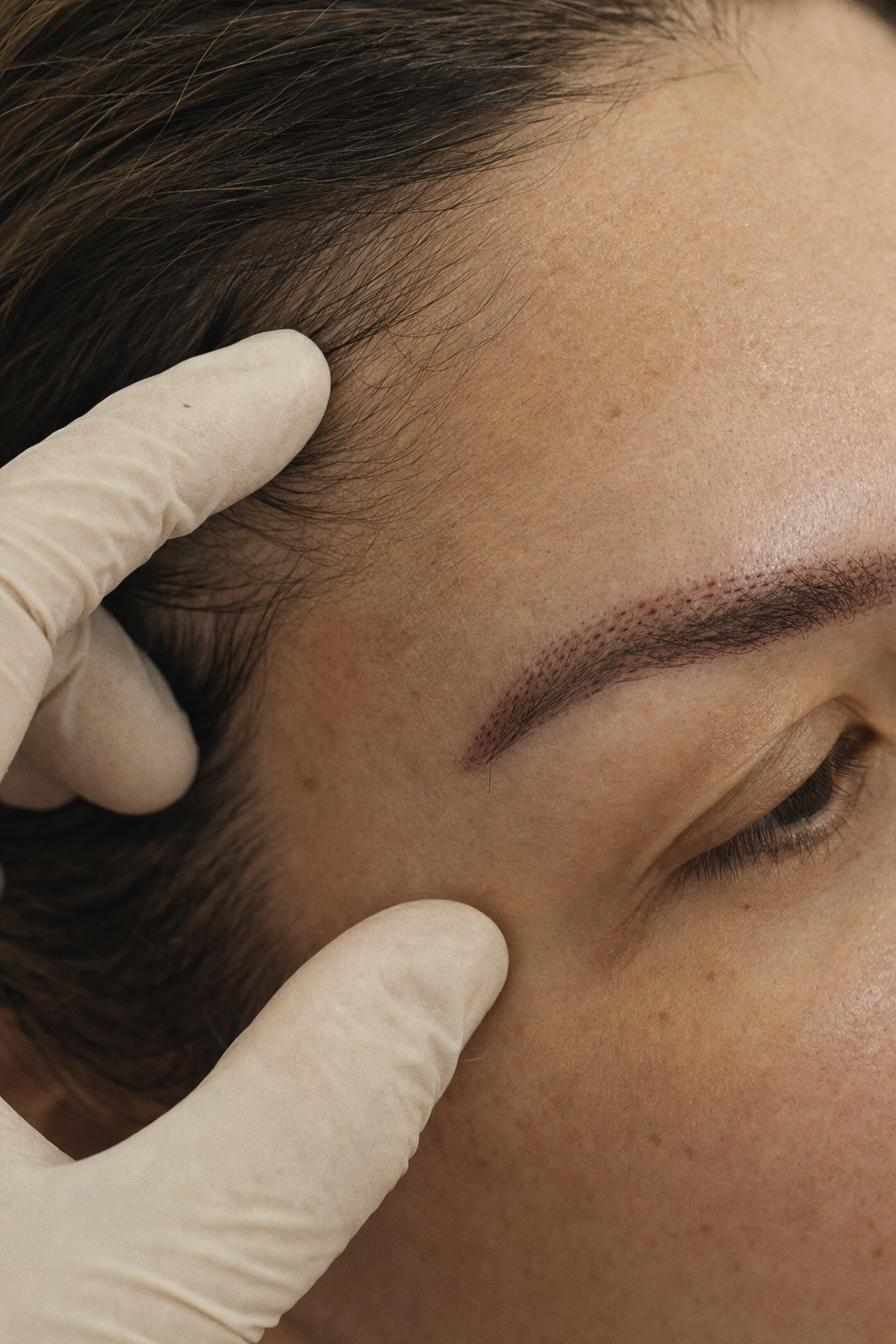
Shock loss is expected and normal.
Between weeks four and eight, the transplanted hairs fall out. This is the part we want you to read carefully and remember.
The follicles themselves are intact below the surface. The hair shaft that came along with each graft is shed as the follicle resets into a new growth cycle. The brow can look thinner during this phase than it did the day after surgery, which is alarming to patients who were not warned. You have now been warned.
Shock loss is not a complication, not a failure of technique, and not a reason to call us in a panic — though you can, and we will reassure you. It is part of the procedure. The growth phase that follows is what produces the long-term result.
Regrowth, density, and the final picture.
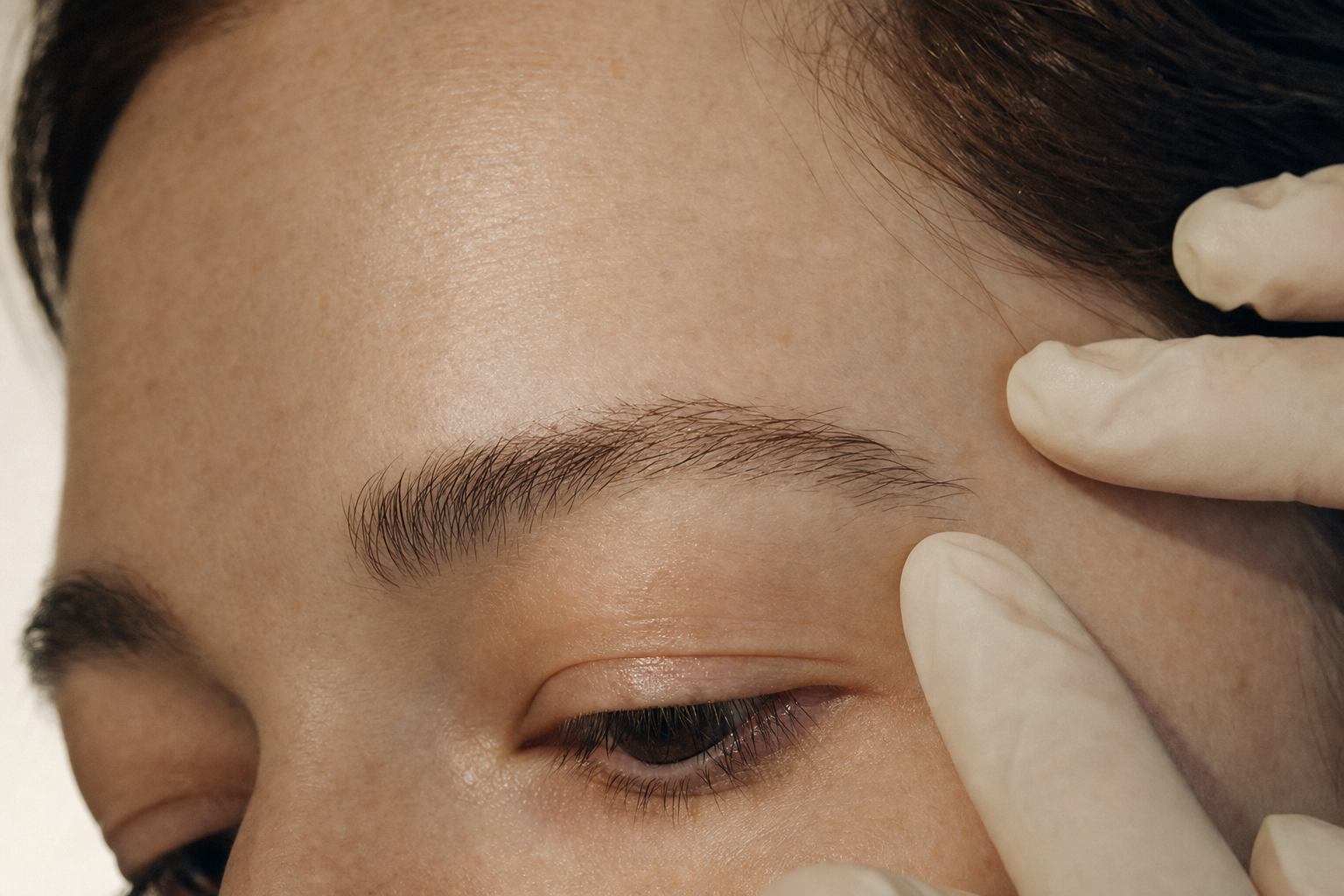
Visible regrowth starts around month three. The first new hairs come in slightly finer and lighter than they will eventually be; pigment and caliber mature over the following months.
By month six, the brow looks credibly like a brow — density is partial but the architecture is visible.
Month twelve is the formal evaluation point. The final density, the final coverage pattern, and the shape as it actually settled are reviewed in person. If a small density touch-up is indicated, this is when we plan it.
What we ask you to do.
- 01
Hands off the brows for the first ten days.
No touching, no picking, no makeup directly on the implanted area. The grafts are securing themselves to their new blood supply during this window. Mechanical disturbance is the single biggest controllable risk to graft survival.
- 02
Saline mist several times per day.
We provide a small spray bottle. Light misting keeps the scabs soft and prevents itching. Do not wipe; let it air-dry.
- 03
Sleep with head elevated for two to three nights.
An extra pillow is enough. The goal is to minimize gravitational swelling across the forehead during the first 48 to 72 hours.
- 04
Avoid heavy exercise and saunas for two weeks.
Sweat and heat both compromise the scab phase. Walking is fine; lifting, hot yoga, sauna, and steam are not.
- 05
Sun protection on the brows.
Once the scabs release and the brows are healed, sun protection on the area is important — UV exposure during the early healing window can lengthen pinkness. A wide-brim hat for outdoor time during the first month is the simplest answer.
- 06
Trim the donor area normally.
The donor zone on the scalp heals quickly and is concealed by surrounding hair within weeks. No special care needed beyond gentle washing.
What is normal and what is not.
Normal: pinkness, mild swelling, pinpoint scabbing, mild itching as scabs lift, shock loss between weeks four and eight, and the slow buildup of regrowth across months three through twelve.
Not normal: significant pain not controlled by over-the-counter medication, expanding redness, warmth, or drainage from the brow or donor site, fever, or any sign of infection. Call the practice immediately if any of these appear. We have an after-hours line for post-operative patients.
- Plan for two weeks before any photographed event you do not want to attend with healing brows.
- Arrange a driver for the day of surgery — sedation, if used, makes driving unsafe.
- Stock saline spray, mild non-medicated moisturizer, a wide-brim hat, and an extra pillow before the day.
- Talk to anyone you live with about the no-touching rule — partners and pets are the two most common sources of mechanical disturbance.
Performed by Orr Swissa-Amran, PA-C, board-certified Physician Associate, internationally trained in hair restoration and aesthetic medicine.
Questions we get.
How soon can I go back to work?
Most patients return to in-person work between days seven and ten depending on how visible the implanted brows are at that point. Remote work can resume the day after surgery if you feel up to it.
When can I wash my face?
Gentle washing of the rest of the face is permitted the day after surgery. The brow area itself stays hands-off and is misted with saline rather than washed for the first ten days. Detailed instructions at discharge.
Can I wear brow makeup during recovery?
Not directly on the implanted area for the first ten to fourteen days. After that, light brow makeup is generally permitted; we confirm timing at your two-week check.
What if I need a touch-up at month twelve?
Some cases benefit from a small density refinement at the twelve-month evaluation. If yours does, we plan it then based on the actual outcome rather than the prediction. Touch-up scope is discussed at the time of the primary procedure.
When can I exercise again?
Light walking is fine immediately. Heavy exercise, weightlifting, hot yoga, sauna, and steam are paused for two weeks to protect the scab phase. We confirm clearance at the two-week check.
Will the brow look thinner at week six?
Often yes — this is the shock-loss phase. The brow can look thinner than it did the week after surgery because the transplanted hair shafts are being shed while the follicles reset into a new growth cycle. The follicles themselves are intact below the surface.
Will the donor area on my scalp be visible?
The donor zone is small and chosen to be concealed by surrounding scalp hair. By the time it is grown back over (a few weeks), it is invisible. There is no linear scar with FUE.
Continue.
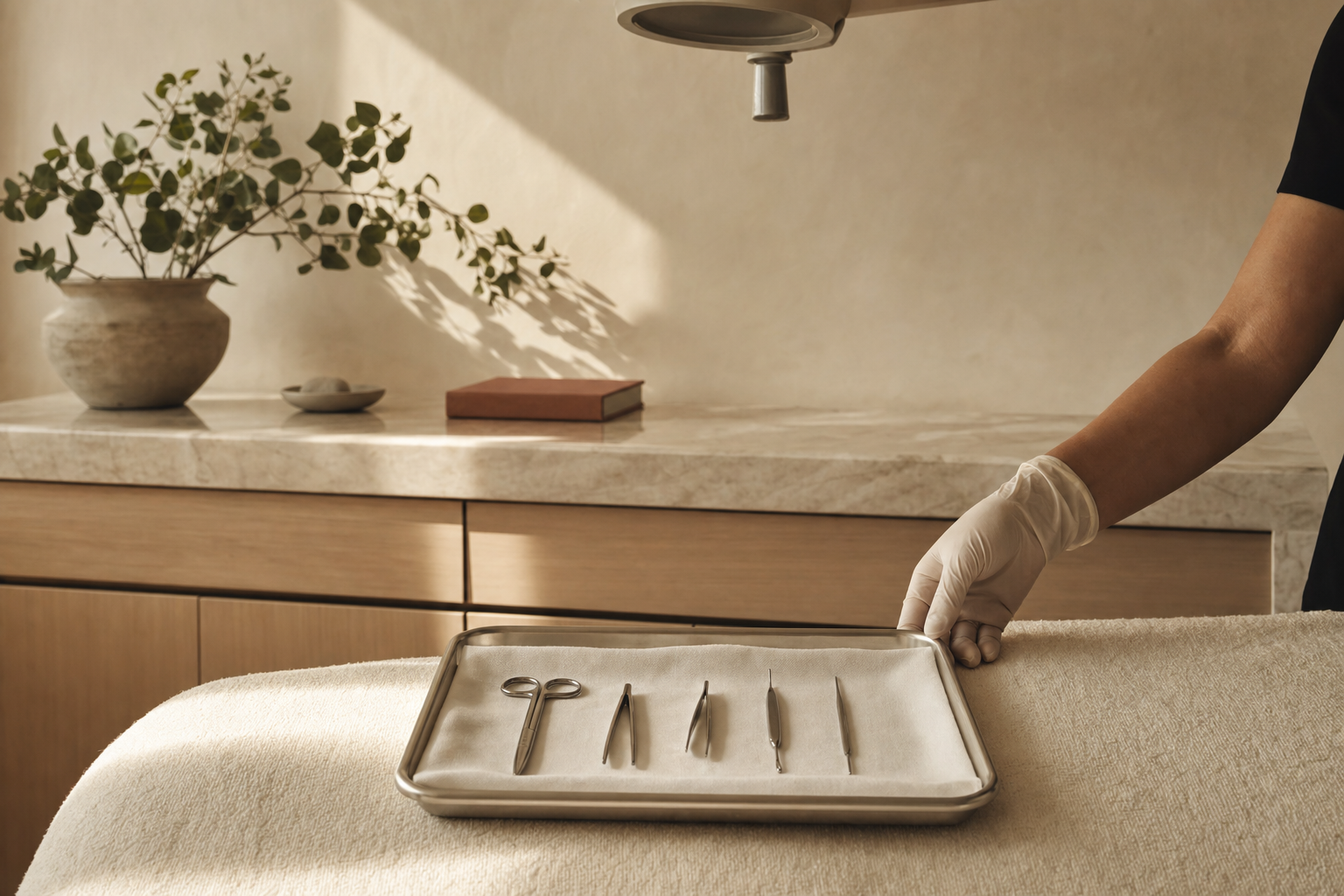
A surgical brow restoration combining Dr. Peterson's FUE training, Orr Swissa-Amran's medical execution, and Ruth Swissa's 25 years of eyebrow shape design.
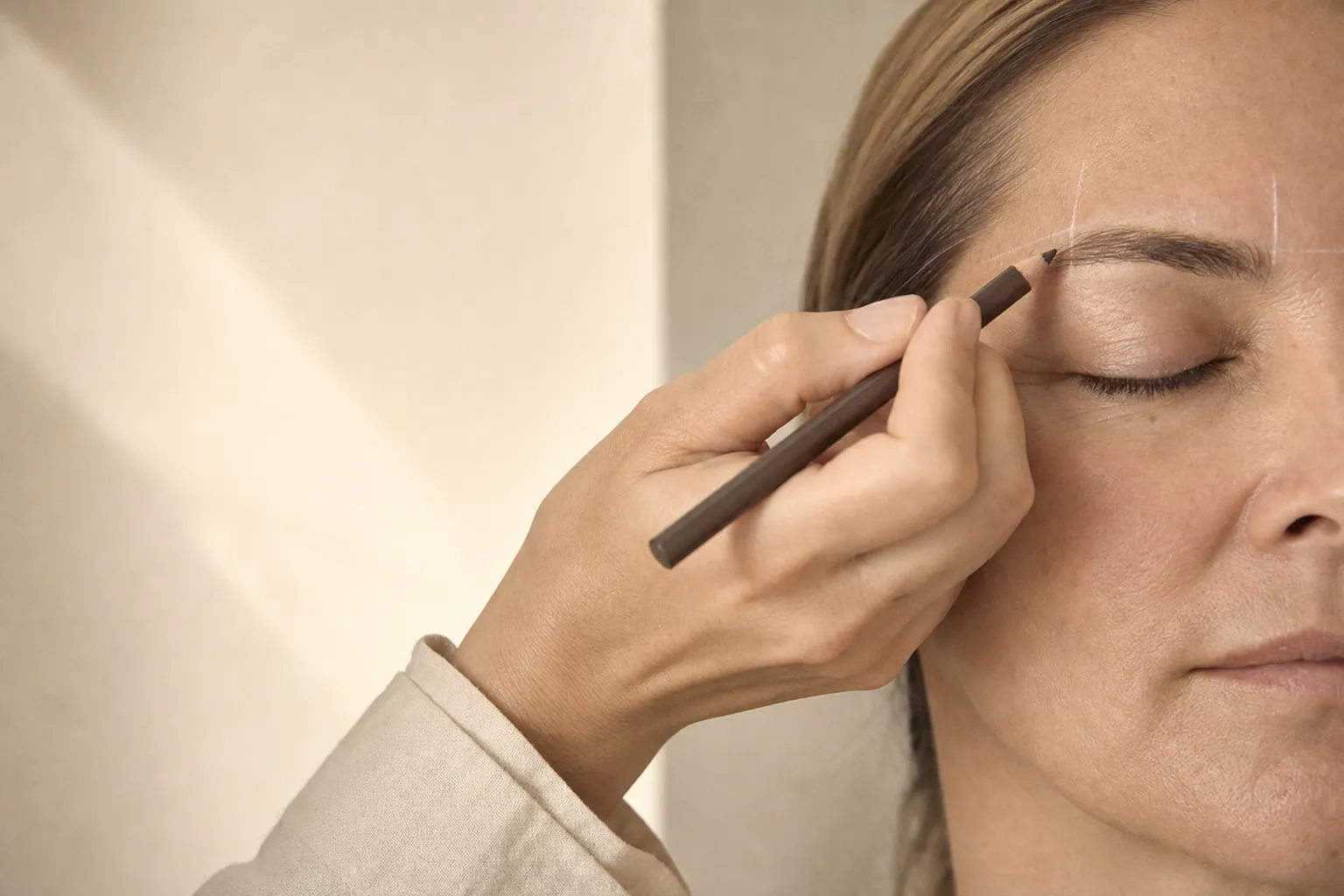
Who an eyebrow hair transplant is for, who it isn't for, and the medical and aesthetic questions we answer at the first consultation.
The questions patients ask about an eyebrow hair transplant — graft count, donor area, shock loss, permanence, and what we won't promise.
Schedule a consultation for recovery after an eyebrow hair transplant.
“They're truly my one-stop shop for everything beauty and skincare. The entire team is so knowledgeable, honest, and always ready to help…”