Pigment laser. Melasma, sun spots, hyperpigmentation.
Melasma is a hormonal-and-UV chronic condition, not a spot to zap. Our conservative protocol, sun spots vs melasma, realistic outcomes.
No — and treating them with the same protocol is one of the most common mistakes in pigment laser work. Sun spots are localized accumulations of pigment that respond well to direct treatment. Melasma is a chronic, hormonally and UV-driven dyspigmentation that often worsens with aggressive laser. We use the same device for both, with very different protocols.
Melasma is chronic. Sun spots are discrete.
A sun spot — a solar lentigo — is a stable, localized concentration of melanin produced by years of UV exposure. It sits where it sits. With a properly targeted pigment laser, the melanin shatters into smaller particles, the body clears them, and the spot fades — usually in one to three sessions.
Melasma is different. It's an active, chronic dysregulation of melanocyte behavior, driven by some combination of hormonal influence (pregnancy, oral contraceptives, hormonal IUDs), UV exposure, heat, and genetic predisposition. The melanocytes are producing pigment continuously. A laser can address what's already in the skin, but if the underlying drivers aren't managed, the pigment returns — often deeper than it started.
Most patients who come in asking for melasma treatment have already had a laser try at it elsewhere. The history is similar enough that we recognize it: brief improvement, then a flare worse than the original presentation. The protocol for melasma starts much more conservatively than that.
What we use for which concern.
| PicoSure Pro · 755 nmPicosecond alexandrite | Our default for sun spots, post-inflammatory hyperpigmentation, and superficial melasma in lighter Fitzpatrick types. Picosecond pulse shatters pigment particles photoacoustically with minimal thermal injury, which is the relevant feature when treating melasma. |
|---|---|
| Q-switched Nd:YAG · 1064 nmLong-pulse for darker skin | Deeper penetration, less melanin absorption — useful in darker Fitzpatrick types where superficial wavelengths risk damaging epidermal melanin. The Spectra Q-switched protocol for melasma uses sub-therapeutic 'laser toning' over many sessions, which we offer cautiously. |
| Topical and oral co-therapyNot a laser, but part of the plan | For melasma, the laser is at most half the work. Tranexamic acid (oral or topical), tyrosinase inhibitors (hydroquinone for short courses, cysteamine longer-term), strict SPF 50+ daily, and a heat-management plan are the rest. The laser without the topicals is a waste of the laser. |
A flare you didn't have before.
Aggressive pigment laser settings on melasma can produce an immediate visible improvement, sometimes for weeks. The patient leaves the appointment happy. Then somewhere between four and twelve weeks later, the pigment returns — often spreading beyond the area that was originally treated, often darker, and frequently with a confluence that wasn't there before.
This is rebound melasma, and it's been documented since the earliest pigment lasers came to market. The underlying mechanism is thermal injury to melanocytes that haven't been removed — only stimulated. Conservative dosing, longer intervals between sessions, and unflinching daily UV management is the protocol that doesn't produce it.
We'd rather see slow, durable progress over a year than a six-week win that compounds over the following six months.
What we tell patients"Melasma is managed, not cured. The patients who do best with it accept that framing first."
How a melasma course actually runs.
- 01
Baseline and screening.
We document the pigmentation with standardized photography, identify hormonal contributors, review medications, and set a UV-management baseline. If you can't commit to daily SPF, we don't start.
- 02
Topical priming.
Most melasma plans include a 4 to 8 week topical priming course — tranexamic acid, tyrosinase inhibitors, gentle exfoliation — before any laser. The laser response is more predictable when the melanocyte activity has been quieted first.
- 03
First conservative session.
Sub-therapeutic settings on the relevant wavelength. Sometimes a small test region first, before treating the full area. We watch the response over the following 6 to 8 weeks.
- 04
Cadence and maintenance.
Sessions every 6 to 8 weeks during the active treatment course, then transition to quarterly maintenance for at least a year. Patients who hold the topicals and the SPF can often extend intervals further.
Where the laser actually shines.
Discrete solar lentigines on the face, décolletage, and hands respond predictably to PicoSure Pro. Most patients see the spot darken in the first 24 hours after treatment, scab over the following week, and reveal clear or significantly faded skin underneath as the scab releases.
One to three sessions is typical. Larger or older spots can need more. Post-inflammatory hyperpigmentation — pigment left behind after acne, after a cut, after a previous laser — responds similarly, with the protocol calibrated to skin tone.
If you came in for a sun spot and we find melasma underneath, we'll tell you so. The treatment isn't the same.
- Tanned skin. Defer until the tan resolves — 4 to 6 weeks minimum.
- Active melasma flare without a topical priming course first.
- Patients within 6 months of isotretinoin (Accutane).
- Pigmented lesions where the diagnosis is uncertain. We refer to dermatology for biopsy before any laser.
- Melasma in patients who cannot commit to daily SPF and the topical protocol.
Supervised by Dr. Charles Peterson, board-certified physician with nearly a decade in aesthetic medicine.
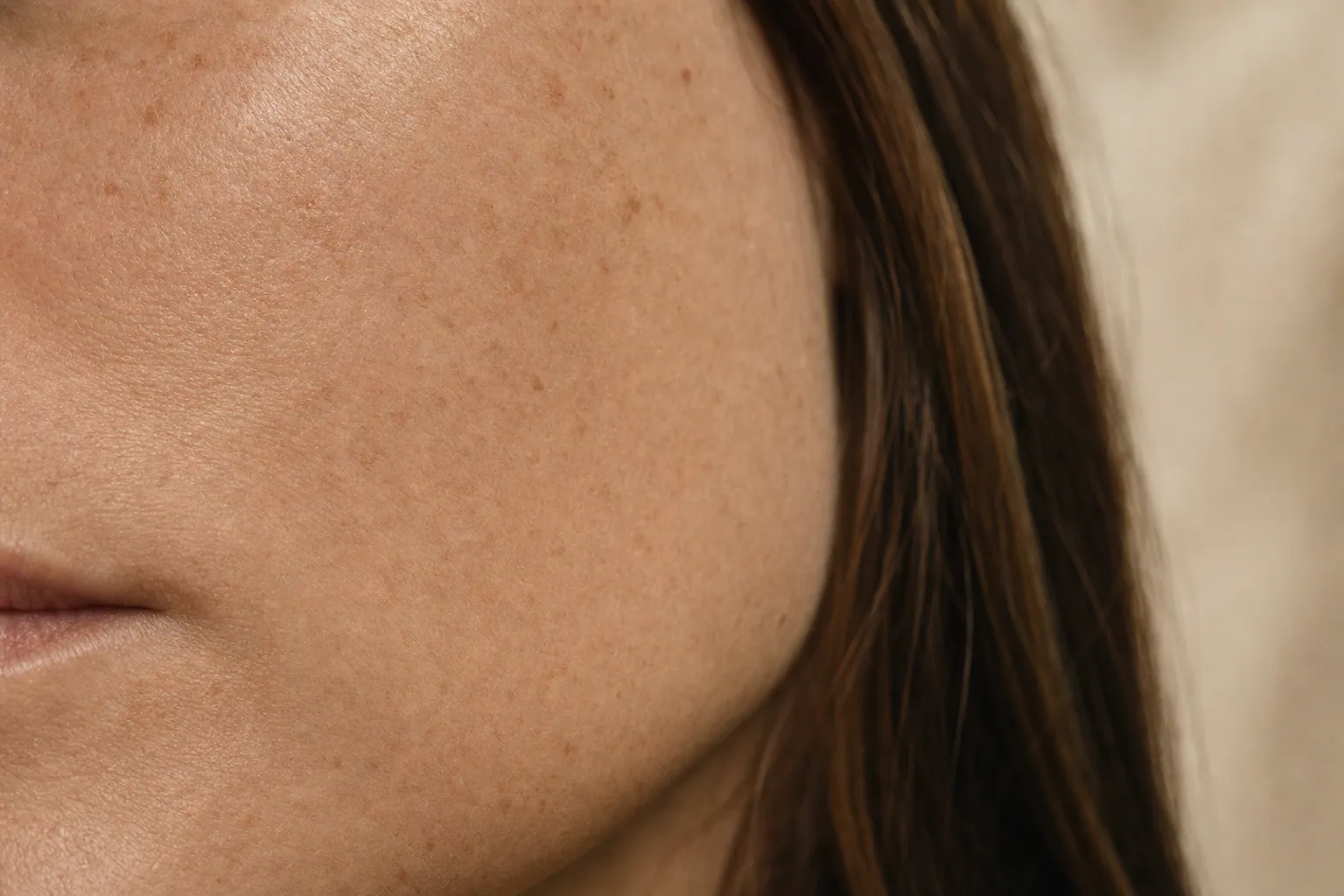
Pigment laser results.
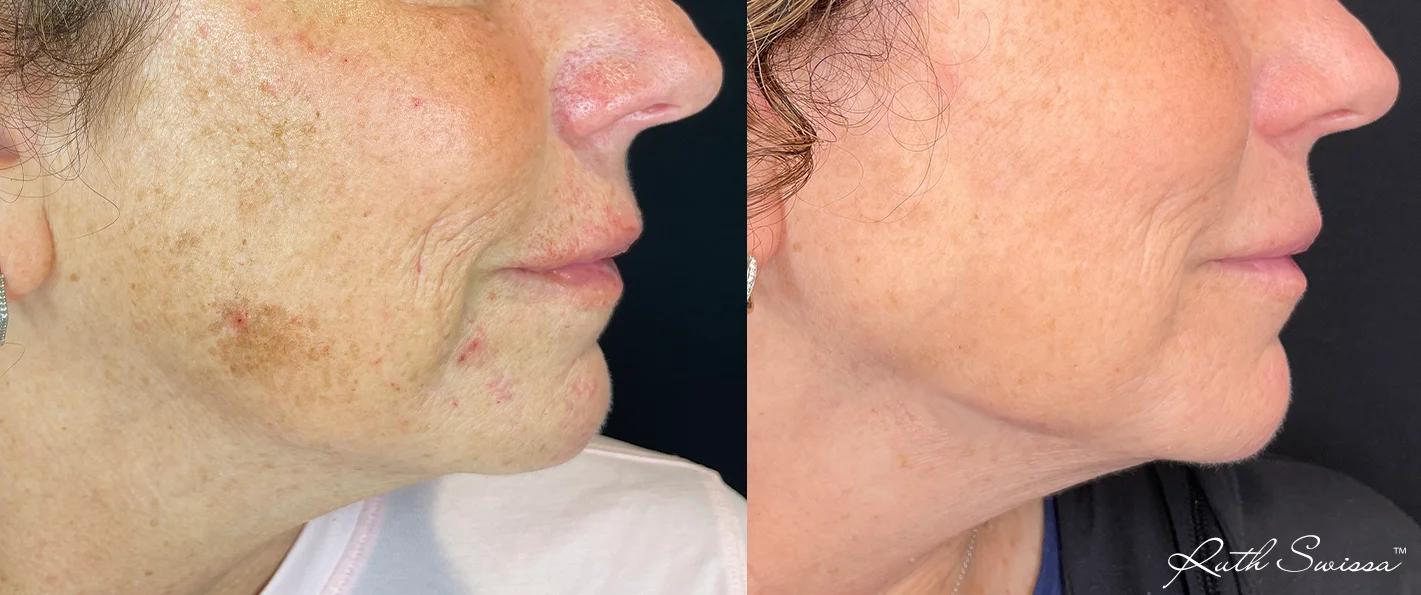
Photograph from the Ruth Swissa studio archive, shared with patient consent. Melasma cases are evaluated separately at consultation — pigment depth and Fitzpatrick type determine candidacy.
Questions we get.
Will my melasma come back?
Probably, at least partially. Melasma is a chronic condition; laser addresses pigment that's currently in the skin but doesn't change the underlying melanocyte behavior. The patients who hold their results longest are those who maintain SPF and the topical protocol indefinitely.
Is the laser safe for my skin tone?
Most pigment lasers can be used across Fitzpatrick types with the right wavelength and conservative settings. Some — older alexandrites in particular — should not. We classify and choose at consultation.
What about IPL or BBL?
Intense pulsed light is a different modality that can work on sun spots and superficial pigment but generally isn't our first choice for melasma. We can refer if IPL is the better match.
How many sessions for a sun spot?
Most clear in one to three sessions. Spots that have been there longer or sit on the hands and décolletage can take a few more.
Can I do this while pregnant?
No. We defer pigment laser during pregnancy and breastfeeding. Melasma triggered by pregnancy often partially resolves on its own postpartum; we wait to see where it lands before starting treatment.
Continue.
Ablative resurfacing, pigment, vascular, RF, hair removal, tattoo and PMU removal — how we choose by concern, not by device.
Ablative laser resurfacing for texture, pores, fine lines, crepiness and photodamage. Real downtime, Fitzpatrick caveats, recovery protocol.
Pores, fine lines, tone unevenness, crepiness and laxity — a layered approach using regenerative microneedling, lasers and peels.
Schedule a consultation for pigment laser. melasma, sun spots, hyperpigmentation.
“I had ablative CO2 laser resurfacing. Next to no pain! … She explained everything in detail and was explicit in after care instructions…”