Under-eye filler. Tear trough treatment, done conservatively.
Under-eye filler for tear-trough hollowing — candidacy honesty, the low-G-prime gels we use, Tyndall risk, and when cheek support comes first.
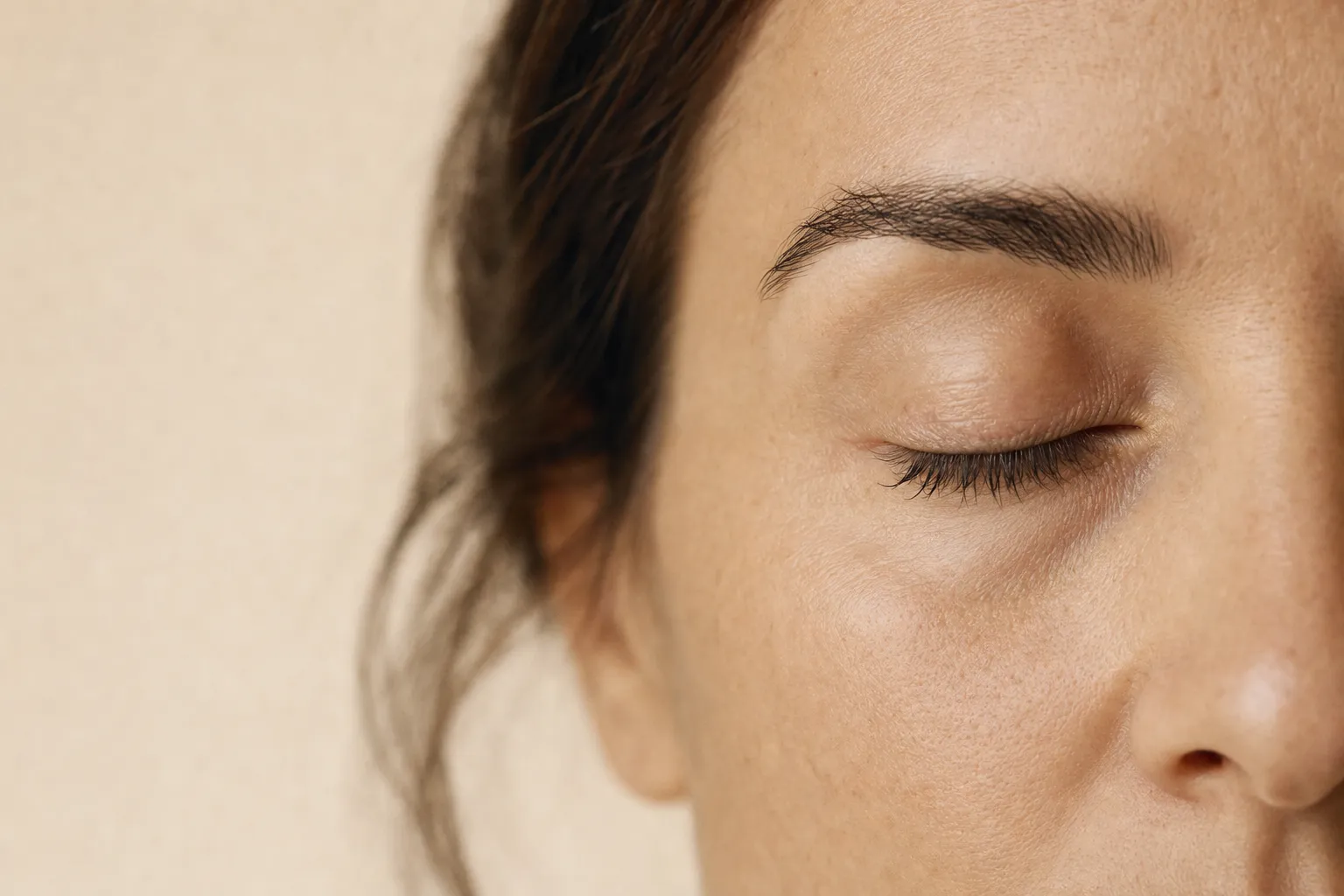
Under-eye filler is a small volume of soft, low-G-prime hyaluronic acid gel — Restylane Eyelight, Juvéderm Volbella, Belotero — placed in the tear trough to soften a true hollow between the lower lid and the cheek. It is the most candidacy-dependent filler treatment we perform, and the one we decline most often.
The narrowest candidacy in injectable medicine.
We say no to under-eye filler more than to any other treatment on the menu, and that is by design. The skin here is the thinnest on the face, the anatomy is unforgiving, and every error is visible at conversation distance. The procedure works beautifully — for the right anatomy, conservatively dosed. The differentiator is knowing which anatomy that is.
What it treats: a true tear-trough hollow — a groove between the lower lid and the cheek that casts a shadow. What it cannot treat: puffiness, malar bags, dark pigment, or fine crepey texture. Filler under a puffy eye makes a puffy eye larger; filler under pigmented skin changes nothing about the pigment.
A no at consultation costs you nothing. The wrong filler under your eye costs months. We run the consultation accordingly.
Who does well, and who doesn't.
| Good candidatesTrue hollow · good skin | A defined tear-trough groove with shadow, skin of reasonable thickness and elasticity, no tendency toward fluid retention, and expectations set on a subtle correction rather than an erased under-eye. |
|---|---|
| Poor candidatesWe decline | Under-eye puffiness, malar bags, or festoons — filler adds to the bulge. Very thin, crepey skin, where product and Tyndall discoloration both show. Pigment-driven dark circles, which filler does not address. Patients prone to fluid shifts or seasonal allergies. |
| Often redirectedA better first move | Midface-deflation cases, where cheek support shortens the trough and shrinks or eliminates the under-eye dose. Skin-quality cases, which do better with PRF, biostimulation, or resurfacing than with gel. |
Soft gels, cannula entry, deliberate under-correction.
The gels are chosen for thin planes: low-G-prime products like Restylane Eyelight — FDA-approved specifically for the under-eye — Juvéderm Volbella, or Belotero. Structural cheek gels do not belong here; firm product in thin skin is how visible lumps happen.
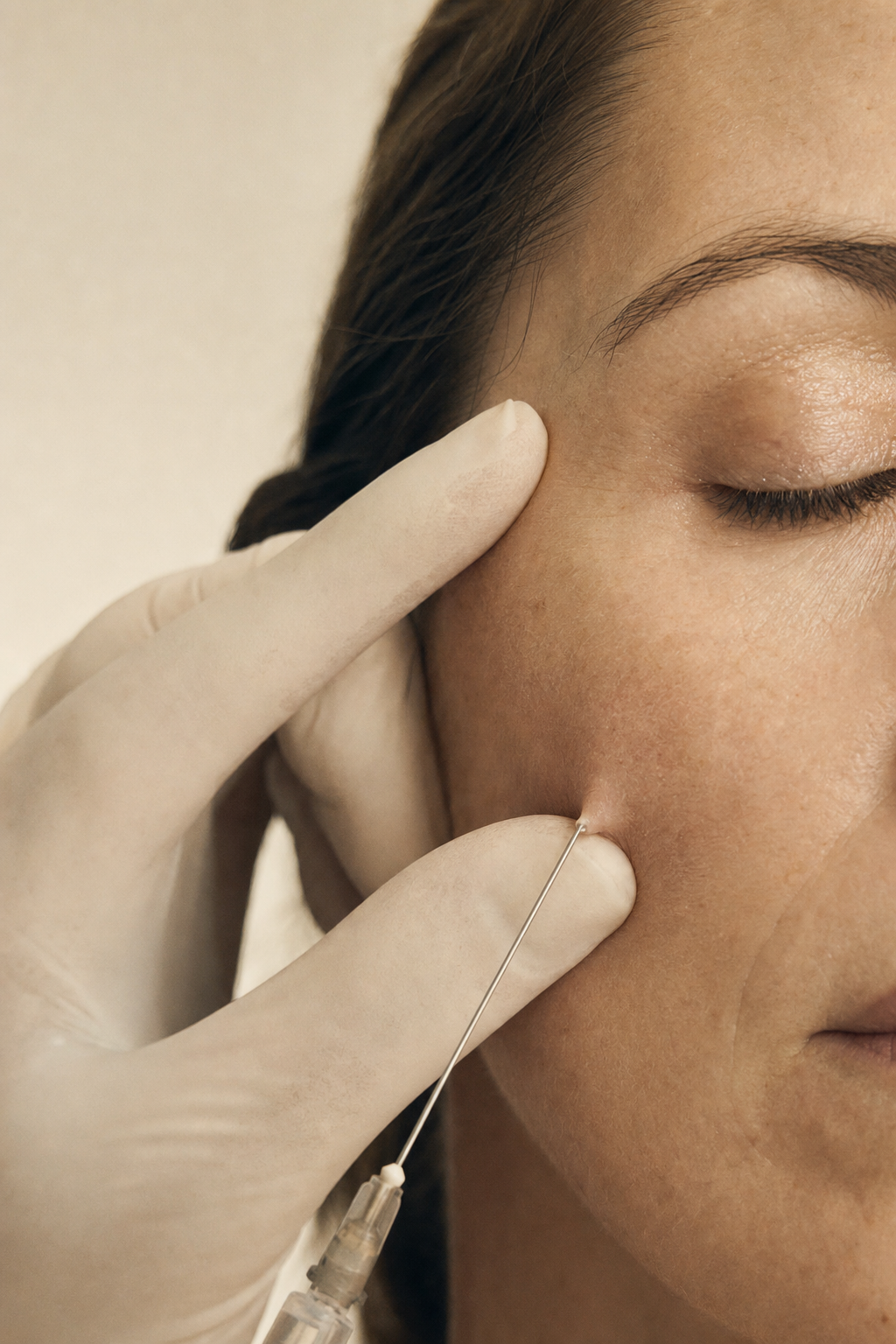
Placement is by blunt-tipped cannula from a single lateral entry point in most cases. In a territory this vascular, the cannula meaningfully reduces both bruising and the risk of injecting into a vessel — it is the standard of care we work to, not an upgrade.
Dosing is small — often half a syringe or less per side. We under-correct deliberately, because this tissue holds water and the result keeps developing for two weeks. Adding later is a ten-minute visit; dissolving an overfill is a process.
Tyndall, swelling, and the escape hatch.
The Tyndall effect is the named risk of this area: hyaluronic acid placed too superficially in thin skin scatters light and reads as a bluish-grey tint. Correct gel choice and depth make it uncommon; nothing makes it impossible, so we disclose it up front rather than in the aftercare sheet.
Swelling behaves differently here than elsewhere. The under-eye holds fluid, and some patients notice intermittent morning puffiness — amplified by salt, alcohol, or allergies — for a period after treatment.
The escape hatch is real: every product we use under the eye is hyaluronic acid, dissolvable with hyaluronidase. It is one reason we keep non-HA products out of this territory entirely. If a result is wrong, it is correctable — a property worth a great deal this close to the eye.
Why the answer often starts one centimeter lower.
A large share of tear-trough consultations end with cheek filler first. When the anterior cheek deflates, the trough above it lengthens and deepens — the hollow is the edge of a midface problem, not a local one. Restoring cheek support shortens the trough at its source.
Sequenced that way, the under-eye itself often needs only a small finishing dose, and sometimes none. It is the slower-looking path that ends with less product under the thinnest skin on your face — which is the kind of trade we will argue for every time.
Performed by Orr Swissa-Amran, PA-C, board-certified Physician Associate, internationally trained in hair restoration and aesthetic medicine.
Questions we get.
Is under-eye filler safe?
In well-selected patients, with soft HA gels placed by cannula in the correct plane, it has a long track record. The risks — Tyndall discoloration, prolonged swelling, and rare vascular events — are real, and we walk through them before treating. Candidacy selection is most of the safety; it is why we decline often.
How much does under-eye filler cost?
It is usually a one-syringe treatment, often less. Per-syringe HA filler in Los Angeles generally runs $500 to $950, with under-eye work from experienced injectors at the top of that band. Our pricing is quoted in writing at consultation.
How long does under-eye filler last?
Often longer than filler elsewhere — twelve to eighteen months is typical and some patients see more, because the area moves little and the doses are small. Metabolism varies; we reassess rather than re-treat on a calendar.
Who isn't a candidate for under-eye filler?
Patients with puffiness, malar bags, or festoons; very thin or crepey under-eye skin; dark circles driven by pigment rather than shadow; and patients prone to fluid retention. For each of those patterns there is a better tool — cheek support, PRF, resurfacing, or simply not treating — and the consultation is where we sort that out.
Continue.

Five filler families, where each one belongs, hyaluronidase if you need it dissolved, and the difference between filling and stimulating.
Cheek filler for midface volume loss — high-lift gels, lateral vs anterior placement, syringe counts, and the overfilled look we avoid.

Multi-syringe, multi-area planning anchored to anatomic landmarks — not lots of filler everywhere.

Volume restoration with dermal filler, biostimulators and facial balancing — planned treatment, not lots of filler everywhere.
Schedule a consultation for under-eye filler. tear trough treatment, done conservatively.
“I had laser for scars and injections with Orr for the first time and am so pleased with the results! She has an amazing eye and such a gentle touch.”