Enhance & restore facial volume.
Volume restoration with dermal filler, biostimulators and facial balancing — planned treatment, not lots of filler everywhere.

Two different tools for two different jobs. Hyaluronic acid fillers — Juvéderm, RHA, Restylane — replace volume the same day. Biostimulators — Sculptra, Radiesse — prompt your own collagen to build it back over months. Most thoughtful plans use both, in sequence, anchored to anatomy rather than to a syringe count.
Where volume actually goes.
Facial volume loss isn't uniform. It happens in compartments — discrete pockets of fat that thin, shift, and descend at different rates. The midface hollows first for most patients, usually in the late thirties to mid-forties. The temples follow. The jawline loses definition as the buccal and pre-jowl fat pads atrophy and the lower face stops resisting gravity.
Bone resorbs underneath it. The orbital rim recedes. The chin loses projection. The maxilla, which holds the cheek up, loses its forward push. None of this is visible at first — what you see is the surface change. The structural change is what's driving it.
Understanding which layer has changed is the entire treatment conversation. Replacing what's lost at the surface when the loss is structural produces the puffy, overfilled look patients reasonably want to avoid. Building back the support at depth — and using filler at the surface only where surface volume has been lost — is the difference.

Two ways volume disappears.
Age-related volume loss is gradual and patterned. Cheek first, temple next, then the lateral brow and the perioral area. It follows the same anatomic sequence in most patients, which is why an experienced injector can predict where you'll need work before you ask for it.
Weight-loss volume loss is faster and broader. After significant weight loss — whether through diet, surgical intervention, or GLP-1 therapy — the face often loses fat across multiple compartments simultaneously. The result reads as gaunt rather than aged, and the plan that addresses it isn't the same as the plan for a 50-year-old who hasn't lost weight.
We ask about weight trajectory at the first consultation because it changes the recommendation. Patients still actively losing benefit from biostimulator protocols that build slowly alongside their changing face; patients at a stable weight can be treated more directly.
Hormones sit behind part of this picture too. Declining estrogen through perimenopause shifts fat distribution and skin quality, which is why volume planning sometimes runs alongside our physician-supervised hormone replacement therapy program — linked below.
What we actually use, and what for.
Volume restoration is rarely one product. The plan below is a starting framework — actual selection happens at consultation, by area and by anatomy.
| Hyaluronic acid fillerJuvéderm · RHA · Restylane · Belotero | Same-day volume in the layer it's injected. Reversible with hyaluronidase if needed. The default for lips, tear trough, lateral cheek, chin projection, and any area where a discrete change is the goal. |
|---|---|
| Lip fillerVolbella · Kysse · RHA | A subset of HA filler with softer, more hydrating formulations. Half-syringe and full-syringe options, both natural-leaning. We don't do the heavily projected lip — it's not a house style and it ages poorly. |
| BiostimulatorsSculptra · Radiesse | Poly-L-lactic acid (Sculptra) and calcium hydroxylapatite (Radiesse) trigger your own collagen response over three to six months. Better for diffuse volume loss than discrete contour work. Builds rather than fills. |
| Facial balancingMulti-product · multi-area | Treating the face as a connected system rather than a list of areas. The chin, jawline, midface, and temple often need to be addressed together for the result to read as a face rather than a feature. |
| Medical weight lossGLP-1 therapy | Mentioned here because it affects volume planning. Patients on semaglutide or tirzepatide often see facial volume loss that outpaces their body change. We coordinate with the weight-loss plan when patients are on both. |
On planning"The face is one structure, not a list of areas. Treat it as a list and the result will look like one."
How we'd approach a volume plan.
Most patients walk in expecting a single product recommendation. The consultation is closer to a conversation about which combination addresses what, in what order, and across what timeline.
- 01
Photographs and a clean look.
Standardized lighting, three angles, no makeup if possible. We're looking at structure, not surface — and a heavy contour reads as something it isn't.
- 02
Anatomic mapping.
Bone, fat compartments, skin envelope. Where has volume been lost, where has it descended, where has the support changed. The plan follows the map.
- 03
Goals, in plain language.
What you'd like to look like in twelve months — not which product you want. Naming a product before the anatomy is settled is how patients end up overfilled.
- 04
Product selection by area.
HA where reversible volume matters. Biostimulator where diffuse rebuild matters. Often both, sequenced over visits rather than stacked into one.
- 05
A staged calendar.
Most volume plans run across two to four visits over six to nine months. We don't do everything at once — anatomy needs time to settle so the next decision is based on the new face, not the imagined one.
A few things we won't do.
We won't add filler to a face that needs a lift rather than volume. If the issue is descent — heavy lower face, loss of jawline definition driven by tissue laxity — filler is the wrong tool. Energy-based skin tightening or, in the right patient, a surgical conversation is the right one. We'll say so.
We won't chase the look of any specific celebrity or photograph. If a reference image is brought to consultation, we use it to understand the aesthetic preference — fuller, softer, more defined — rather than as a target. Faces aren't transferable.
We won't keep filling past the point of return. There's a volume threshold beyond which more filler reads as less face, and an experienced injector recognizes it well before the patient does. Saying no at that threshold is part of the work.
- Active skin infection in the planned treatment area.
- Patients currently or recently pregnant or breastfeeding.
- Patients within 6 months of significant facial surgery without surgeon coordination.
- Patients seeking a specific look we can't deliver safely — we'll say so at consultation.
Continue.

Five filler families, where each one belongs, hyaluronidase if you need it dissolved, and the difference between filling and stimulating.

Volbella, Kysse, RHA. Half-syringe and full-syringe results, an honest natural-vs-overfilled framing, and dissolution if you ever want it gone.

Cheek filler for midface volume loss — high-lift gels, lateral vs anterior placement, syringe counts, and the overfilled look we avoid.
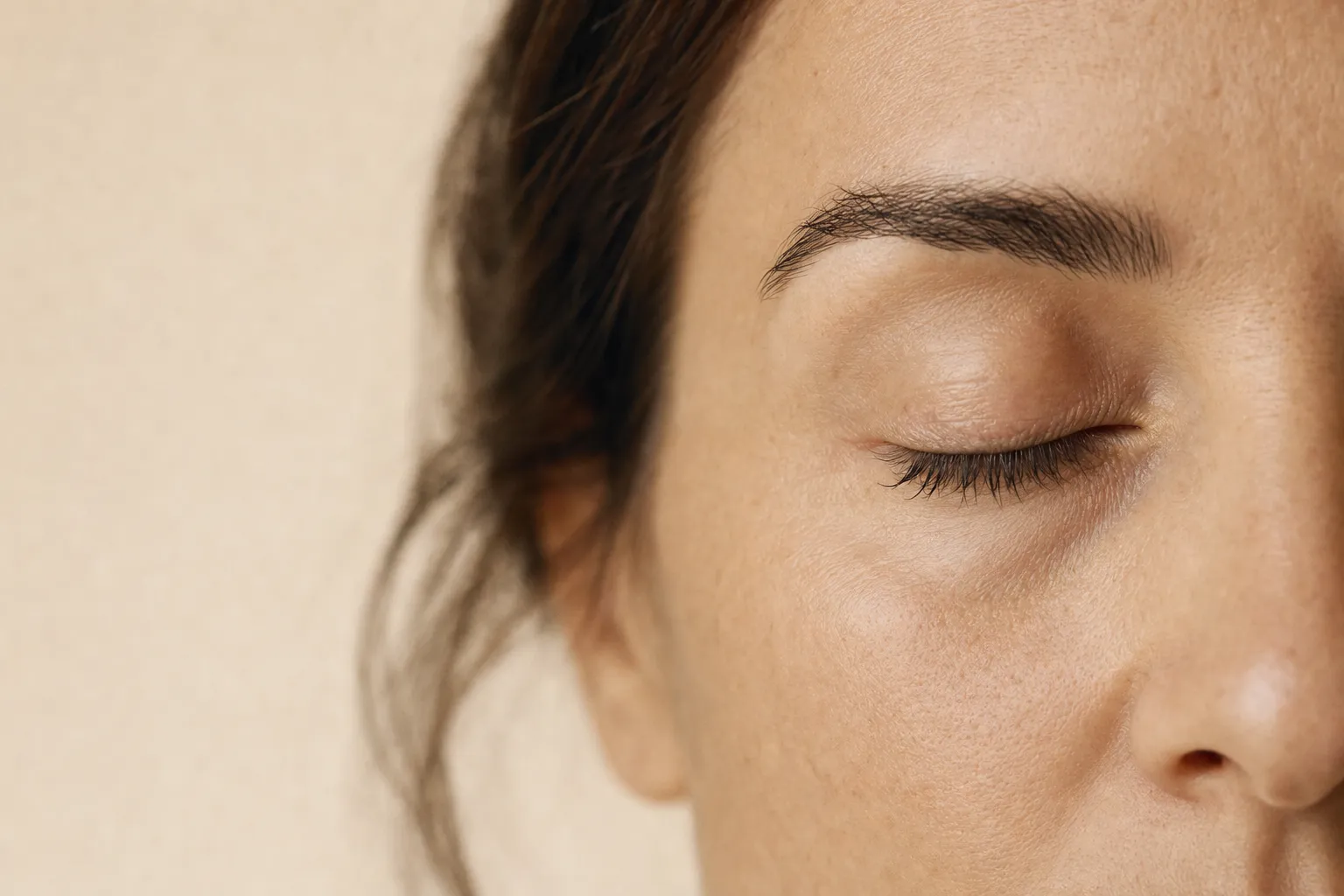
Under-eye filler for tear-trough hollowing — candidacy honesty, the low-G-prime gels we use, Tyndall risk, and when cheek support comes first.
Every booking starts with a conversation.
“They're truly my one-stop shop for everything beauty and skincare. The entire team is so knowledgeable, honest, and always ready to help…”