Microneedling with exosomes. The regenerative add-on.
Microneedling with exosomes — extracellular vesicles applied into SkinPen channels. What the evidence shows, how it compares with PRP.
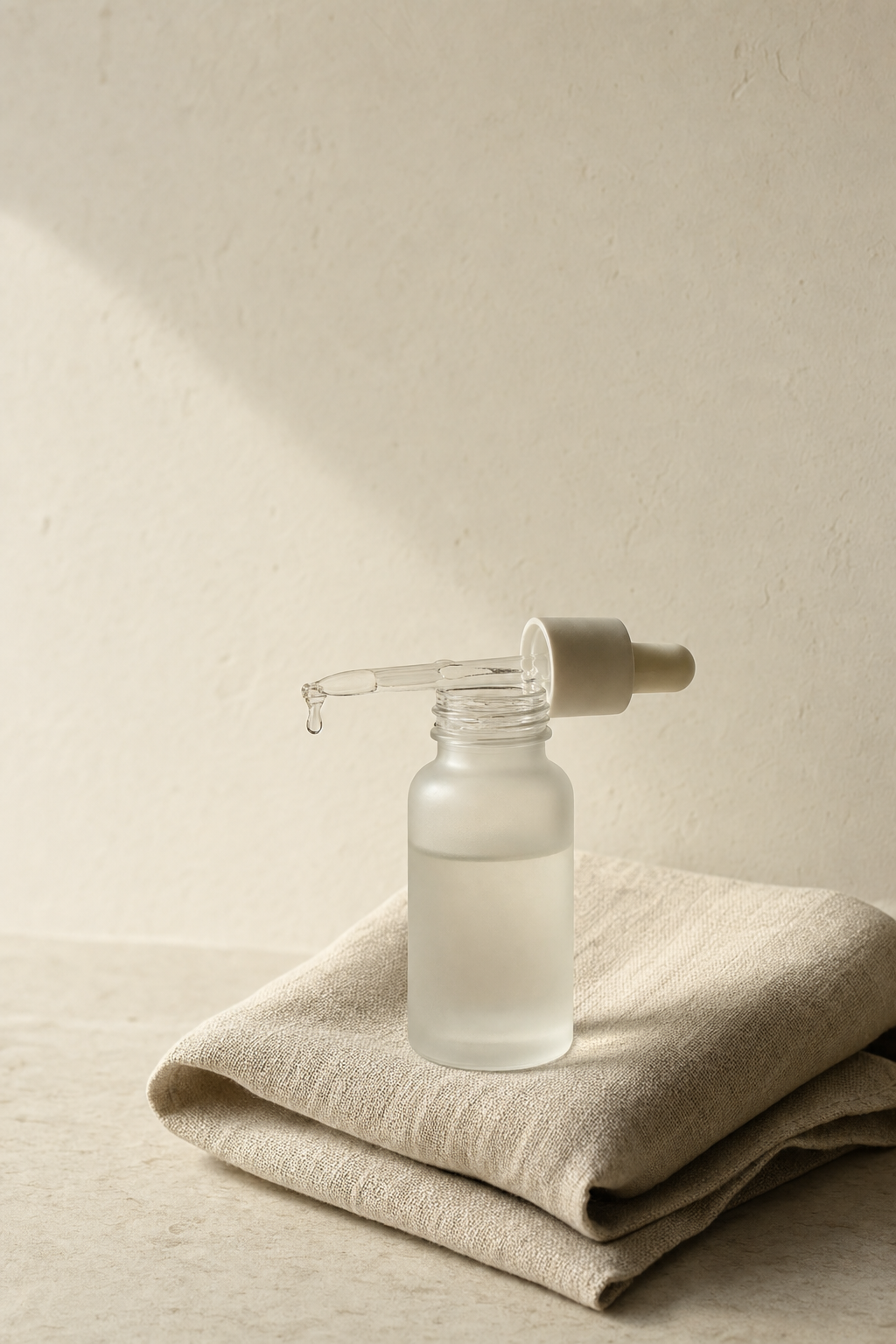
A SkinPen microneedling session with a topical exosome serum applied while the micro-channels are open. Exosomes are nano-sized extracellular vesicles carrying growth factors and other signaling molecules; the needling provides both the collagen stimulus and the delivery route. It's the newest add-on on our regenerative menu — the early evidence is encouraging, and we'll say plainly that it's younger than the data behind PRP.
What an exosome actually is.
Exosomes are extracellular vesicles — membrane-bound particles roughly 30 to 150 nanometers across that nearly all cells release. They are not cells, and they are not alive; they're packets. Inside the lipid membrane is a cargo of proteins, growth factors, lipids, and nucleic acids — including microRNA — that reflects the cell that produced them. When a vesicle is taken up by another cell, that cargo can change the recipient cell's behavior. In skin, vesicles derived from stem-cell cultures have been studied for their effects on fibroblast activity, inflammation, and pigment regulation.
The products used in aesthetics are lab-derived: vesicles isolated from cultured cells — human stem-cell lines or non-human sources, depending on the manufacturer — then purified, stabilized, and supplied as a topical serum. No exosome product currently holds FDA approval as a drug; in the United States they are used as topically applied cosmetic products, which is exactly how we use them. Applied to the skin, never injected.
The evidence base is real but young. Laboratory and animal data are substantial; controlled human trials are fewer and smaller than what stands behind PRP. We offer exosomes because the mechanism is plausible and our clinical observations are good — and we'll keep describing the evidence at the maturity it actually has.
Why needling and exosomes pair.
On intact skin, a 30-nanometer vesicle still sits on the wrong side of the stratum corneum — topical exosome skincare has a penetration problem. SkinPen solves it mechanically. The device creates micro-channels through the epidermis at a controlled depth, and the serum is applied during and immediately after the pass, while those channels are open.
The needling does more than carry. It triggers the wound-healing cascade that drives collagen remodeling on its own, and the exosome cargo arrives in precisely that biological window — the hours when fibroblasts are being recruited. The intended logic is a stimulus plus a signal: the wound starts the program, the vesicles influence how it runs. Sessions follow the standard SkinPen cadence — typically three, four to six weeks apart, with results maturing over twelve weeks.
Where we reach for exosomes.
| Diffuse photoaging | Tone, fine lines, and overall skin quality in patients who'd describe their skin as dull or tired — the most common reason we pair exosomes with SkinPen. |
|---|---|
| Scarring and texture | Post-acne texture and superficial scarring, sometimes alternated with PDRN across a series depending on how the skin responds. |
| Post-procedure recovery | Applied after laser resurfacing or RF microneedling to support calmer, faster recovery. Redness and downtime tend to run shorter in our observation — an effect echoed by early published data, though not yet settled by it. |
The established option and the newer one.
The same SkinPen session can carry either. The honest comparison:
| PRP | Exosomes | |
|---|---|---|
| Source | Your own blood, drawn and spun the day of treatment — autologous. | Lab-derived vesicles from cultured cells, purified and supplied as a sterile topical. |
| What's delivered | Platelets that release growth factors as they degranulate in the channels. | Pre-packaged vesicle cargo — growth factors and microRNA — at a manufacturer-standardized concentration. |
| Evidence maturity | Established — decades of use across medicine, a deep aesthetic literature. | Emerging — strong laboratory data; fewer and smaller human trials to date. |
| Variability | Depends on your platelet count and hydration that day. | Batch-consistent; doesn't depend on your blood. No blood draw required. |
| Typical LA cost | $600 – $1,500 per session. | $1,200 – $1,500 per session. |
| Best for | Routine skin-quality and texture work at a defensible price. | Patients who want the heavier signaling load, or who can't or won't do a blood draw. |
Performed by Orr Swissa-Amran, PA-C, board-certified Physician Associate, internationally trained in hair restoration and aesthetic medicine.
Questions we get.
How much does microneedling with exosomes cost?
Typically $1,200 – $1,500 per session in the Los Angeles market — above PRP, because the vesicles are manufactured, cold-stored, and externally sourced rather than drawn from your own blood. Our pricing is confirmed at consultation, with the series math in writing.
Are exosomes safe?
The safety record for topical use to date is good — the vesicles aren't cells, can't replicate, and the products we stock are screened and sterility-tested by the manufacturer. The honest caveat: this is a newer category with less long-term data than PRP, and no exosome product is FDA-approved as a drug. We use them topically only, never injected.
What's the downtime?
Similar to plain SkinPen — one to two days of redness, often at the milder end in our experience. Most patients are back to normal routines the next day, with makeup from day two.
How many sessions will I need?
Three, four to six weeks apart, is the standard series — the cadence is set by the SkinPen protocol, not the add-on. Visible change typically starts around two weeks after a session and matures over twelve.
Are exosomes better than PRP?
Not categorically. Exosomes deliver a heavier, standardized signaling load; PRP is autologous and far better studied. For routine texture and quality work, PRP usually carries the job at a lower price. We stock both so the consultation can compare honestly rather than upsell.
Continue.

Microneedling layered with growth factors, exosomes, PDRN or copper peptide. What each add-on does, what it costs you in downtime.

Blood-derived growth factors microneedled into skin. What it is, what it isn't, and how it differs from the broader regenerative menu.
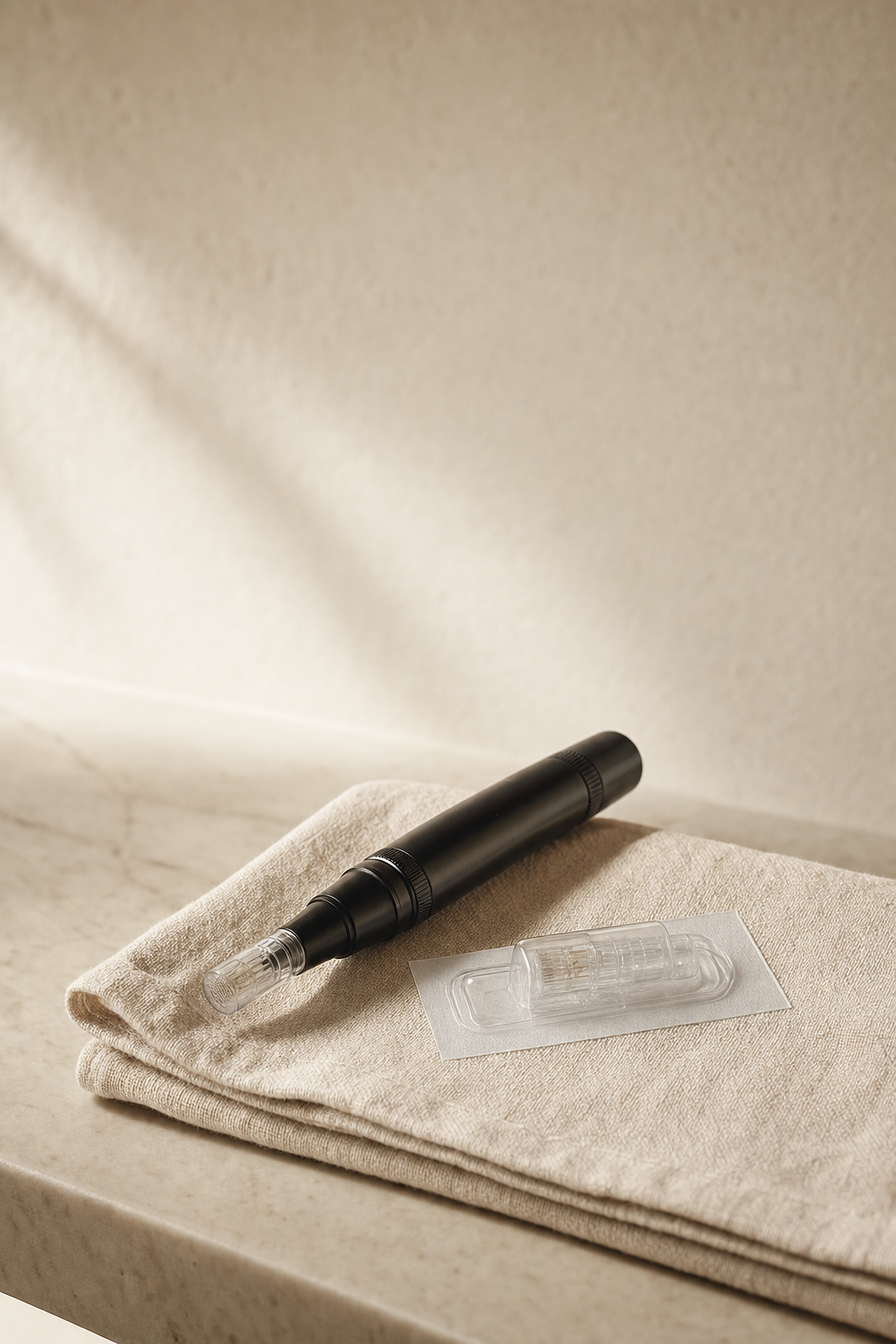
SkinPen — the FDA-cleared microneedling device we run. Depth control, single-use cartridges, the 3-session cadence, and the add-on stack.
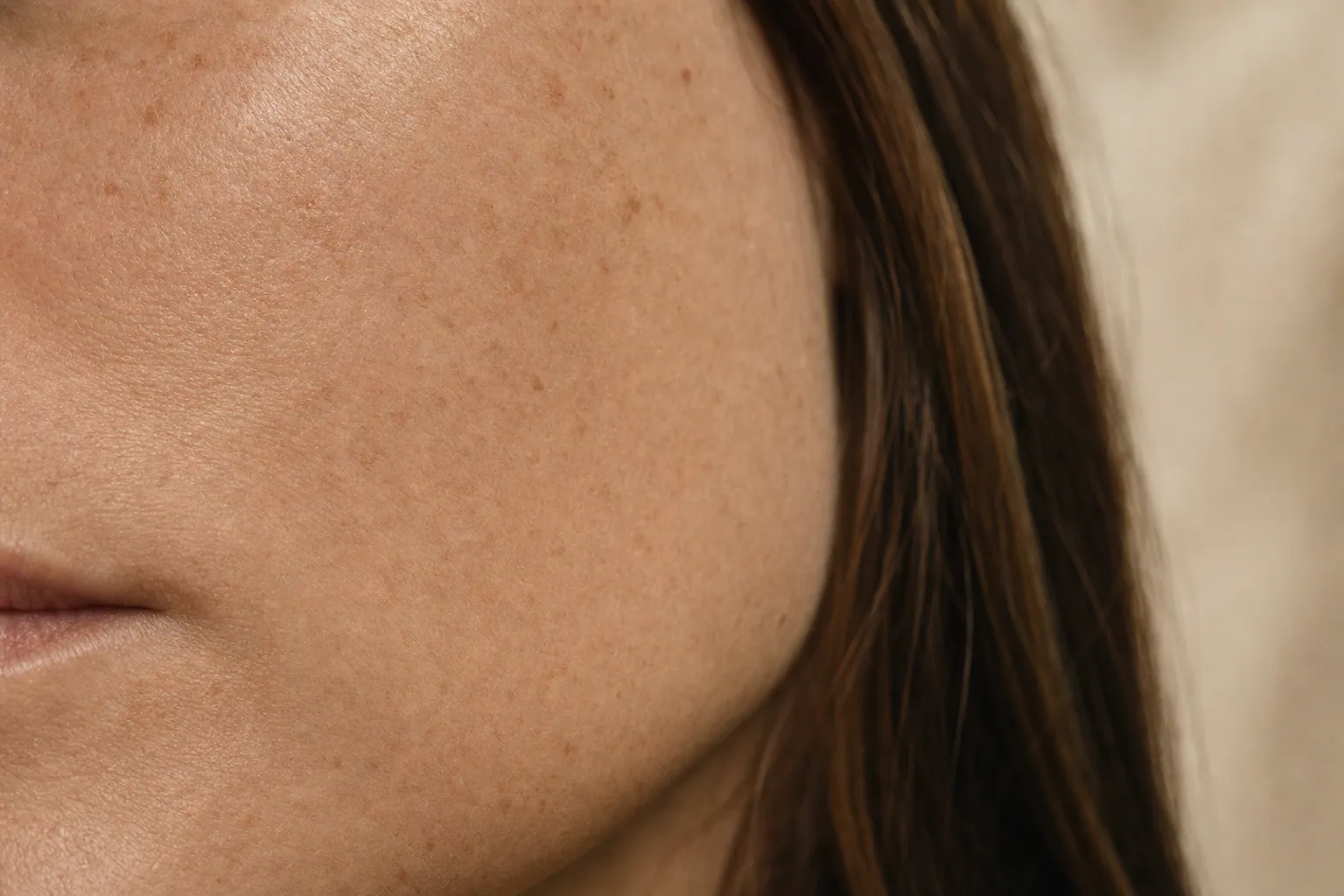
Pores, fine lines, tone unevenness, crepiness and laxity — a layered approach using regenerative microneedling, lasers and peels.
Schedule a consultation for microneedling with exosomes. the regenerative add-on.
“They're truly my one-stop shop for everything beauty and skincare. The entire team is so knowledgeable, honest, and always ready to help…”