What is a medical spa?
Clinical setting offering aesthetic medicine under physician oversight. What distinguishes it from a day spa, what from dermatology.
A clinical setting that offers aesthetic medical procedures — neurotoxins, fillers, lasers, energy devices, regenerative protocols — under physician oversight, in a non-hospital environment. Not a day spa with prescriptions. Not a dermatology office with massages. A specific third category, defined by what it can legally do.
What makes a medical spa medical.
The defining feature is regulatory: a medical spa performs procedures that fall under the practice of medicine. In California, that means a licensed physician must oversee the practice and supervise the non-physician staff who perform medical procedures within their scope. The physician doesn't need to be on site for every treatment, but they must be reachable, accountable, and responsible for the clinical protocols.
Everything that follows from that definition is downstream. The treatments offered are medical treatments. The intake includes medical history. The complications, when they happen, are medical complications managed by people trained to manage them. The setting may look like a spa — and at well-run practices, it intentionally does — but the work is medicine.
A useful litmus test: if a procedure pierces, ablates, or modifies tissue, it is a medical procedure. If the substance going onto or into a patient requires an active medical license to administer, the setting offering it is a medical setting. The decor doesn't change that.
Medical spa, day spa, dermatology.
These three are routinely conflated in marketing copy. They aren't interchangeable. The differences matter for what you can get done, who is responsible, and what happens if something goes wrong.
| Medical spa | Day spa | Dermatology | |
|---|---|---|---|
| Procedures offered | Neurotoxins, fillers, lasers, energy devices, regenerative | Facials, massage, body wraps, hair removal (non-laser) | Skin disease, skin cancer, medical and aesthetic dermatology |
| Oversight | Physician medical director · supervised RN, NP, PA | Esthetician licensure · no medical scope | Board-certified dermatologist · full medical scope |
| Insurance | Cash pay only | Cash pay only | Insurance for medical visits · cash pay for aesthetic |
| What it's good at | Aesthetic outcomes with medical-grade tools | Relaxation, skin maintenance, hands-on care | Diagnosing disease, treating skin conditions |
| What it's not | A relaxation appointment | A place for injections or energy devices | Always the most aesthetically-focused option |
The day-spa overlap is real, and limited.
Many medical spas offer some treatments that exist on day-spa menus too — hydrating facials, chemical peels at low concentrations, dermaplaning. Patients sometimes book one of these and assume the rest of the menu is the same kind of work. It isn't.
The cleanest distinction: a day spa cannot offer anything that breaks the skin in a way that requires a medical license, prescribes anything, or runs energy through the skin at therapeutic depths. A medical spa can, and that's the entire point of the category.
If you want a quiet ninety minutes with a facial and a head massage, a day spa is the right setting. If the result you want requires changing the structure of the skin — collagen remodeling, melanocyte work, fat metabolism — the right setting is a medical spa or a dermatology office.

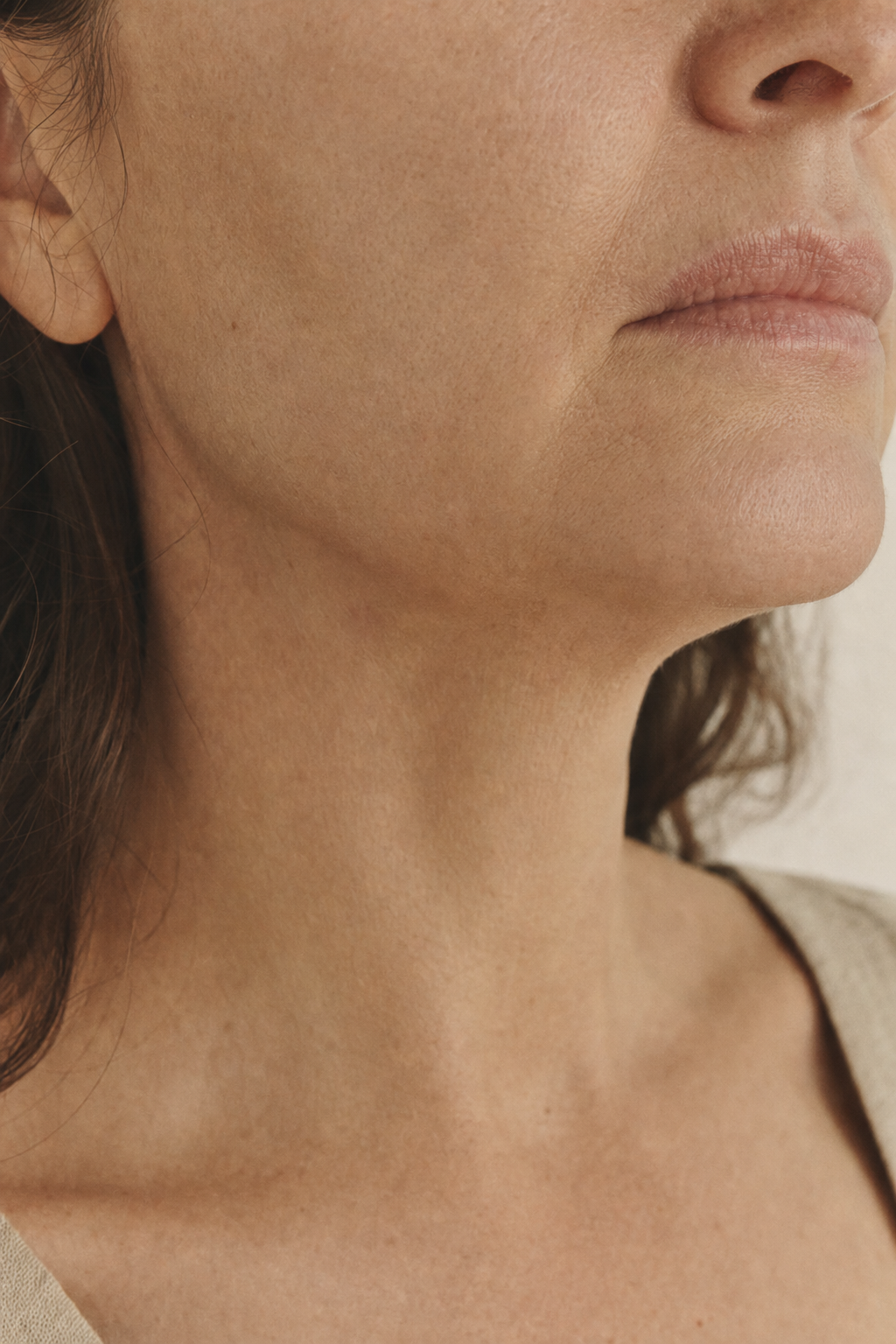
Where dermatology and medical spa diverge.
A board-certified dermatologist has training a medspa staff doesn't: years of pathology, the ability to diagnose skin disease, surgical training for skin cancer excision. If you have a changing mole, an unexplained rash, or a chronic skin condition, the right setting is a dermatologist.
What dermatology often doesn't have is the depth of aesthetic focus a dedicated medical spa builds. The devices may overlap. The cadence of treatment doesn't. A dermatology office may own one laser used across many indications; a medical spa may own four lasers and dedicate clinical time to refining protocol on each.
The two categories aren't competitors so much as they're shaped differently. Most patients are well served by having a relationship with both — a dermatologist for medical skin, a medical spa for aesthetic work.
Shorthand"Day spa is hospitality. Dermatology is medicine for the skin. Medical spa is medicine in the service of aesthetics — a different mandate from either."
What this means for booking.
If you're considering a treatment and aren't sure which setting is right for it, the question to ask yourself is what the goal is. Diagnosis or disease management belongs in a dermatology office. Relaxation and surface-level skin maintenance belong in a day spa. Aesthetic medicine — neurotoxins, fillers, lasers, energy-based skin remodeling, regenerative protocols — belongs in a medical spa.
A medical spa is also where these treatments are typically practiced most. A clinician who performs RF microneedling four days a week sees more skin types, more responses, and more edge cases than one who performs the same procedure twice a month. Reps matter in aesthetics.
Related questions.
Do I need a doctor's referral to visit a medical spa?
No. Aesthetic treatments are cash-pay and don't require a referral. You'll go through a clinical intake before any procedure, but you book directly.
Will my insurance cover anything at a medical spa?
Aesthetic treatments are not covered. Some medical conditions occasionally treated at a medspa — excessive sweating treated with botulinum toxin, for example — may be eligible for coverage through a dermatology office, but not typically through the medspa itself.
Can a nurse perform Botox without a doctor present?
In California, yes — registered nurses can administer botulinum toxin within their scope, under a physician-developed protocol and standing order. The physician must be reachable and accountable; they don't have to be in the room.
Is everything at a medical spa actually 'medical'?
No — most medical spas offer a mix. Facials and basic chemical peels can be performed by an esthetician. Injections, energy-based devices, and prescription topicals are medical procedures and require the appropriate licensure.
What's the difference between a medical spa and a 'wellness clinic'?
Significant overlap, but a wellness clinic typically emphasizes IV therapy, peptides, hormone optimization, and longevity protocols rather than aesthetic outcomes. Some practices do both. The right question is what the practice does most of the time.
How do I know if a medical spa is actually physician-led?
Ask. Specifically: who is the medical director, how often are they on site, and what's the escalation pathway for complications. If the answers are vague, the structure is probably weaker than the marketing suggests.
Continue.
A framework for evaluating clinician credentials, devices, transparency, and post-treatment access. Red flags to watch.

GLP-1 mechanism, on-label vs off-label use, candidacy, side-effect management, what happens when you stop.
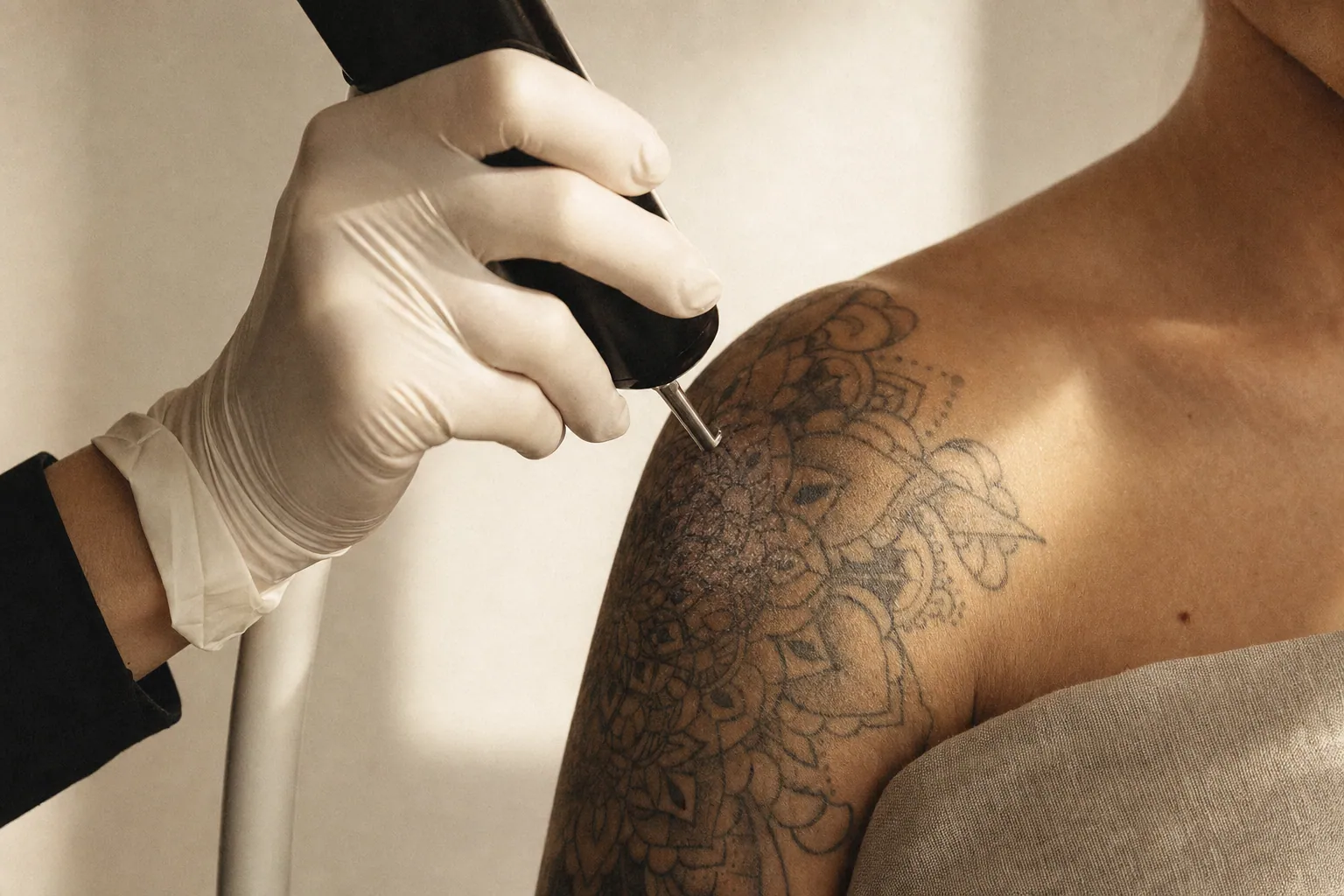
Picosecond laser tattoo removal. Sessions, sensation, the ink the older lasers can't reach, and why removal sometimes belongs with the same team that does the cover-up.
Every booking starts with a conversation.
“They're truly my one-stop shop for everything beauty and skincare. The entire team is so knowledgeable, honest, and always ready to help…”