How to choose a med spa in Los Angeles.
Read the credentials, not the marketing. Ask which devices the practice owns versus leases. Ask who handles a complication and at what hour. Ask to see unretouched before-and-afters in matched light. Pricing should be discussed at consultation, but the structure of it shouldn't be a mystery.
What the tiers actually mean.
Most consumers don't know that 'medical spa' is a marketing term, not a regulatory one. The clinical structure underneath varies more than the storefronts suggest.
| Physician-led | NP/PA-led | RN-only / unclear | |
|---|---|---|---|
| Who directs care | MD or DO actively involved in protocol and complications | Nurse practitioner or physician assistant under collaborative MD agreement | Often a 'medical director' on paper only — rarely on site |
| Scope of treatment | Full menu including resurfacing, threads, complication management | Most aesthetics within scope; some lasers require MD review | Injectables and basic devices; deeper work routinely referred out |
| Complication response | On-site assessment; hospital privileges if needed | Documented escalation pathway to supervising MD | Variable — sometimes a phone tree to a director you've never met |
| What to ask | Who is the MD, how often are they on site | Who is the collaborating MD, what's the escalation protocol | Who do I call at 9 p.m. on a Saturday after a filler reaction |

Read the license, not the bio.
In California, the relevant credentials are board-certification (for physicians), active state licensure (verifiable through the Medical Board of California or the Board of Registered Nursing), and current device-specific training for whoever holds the handpiece. The state's license-lookup tool is free and takes thirty seconds.
Bios are written by marketing teams. 'Expert injector' is not a credential. 'Master injector' is not a credential. Years of experience is meaningful only if those years involve the specific work you're considering — an RN with eight years of Botox is not equivalent to an RN with eight years of laser-assisted skin remodeling.
Ask who specifically will be performing your treatment. Ask whether that person sees you for follow-up, or whether a different staff member does. Continuity of clinician is a small detail that changes outcomes more than most patients realize.
What they actually own.
A meaningful portion of the L.A. medspa market runs on leased, shared, or rotating-pool equipment. The marketing copy describes the device; the contract describes who can use it and when. This is a fair question to ask out loud.
| Owned and on-siteThe practice has the device in the building, every day | Most consistent outcomes. The clinical team knows the platform's quirks across thousands of treatments, settings are tuned in-house, and you're not scheduled around a delivery window. |
|---|---|
| LeasedLong-term contract with the manufacturer | Functionally similar to owned for most patients. The honest version: ask whether the practice has used this same platform for at least two years. A new lease means a new learning curve. |
| Shared or rented per-dayDevice arrives on a truck, treatments cluster on those days | Common for higher-priced lasers a smaller practice can't justify owning. Not a red flag on its own — but it does mean tighter scheduling, less flexibility for retreatment, and a clinical team with less daily reps on the platform. |
| Referred outMarketed on the website, performed elsewhere | Watch for this on the menu pages of multi-location chains. The treatment is described in detail; the location is vague. Ask explicitly where the treatment will be performed and by whom. |
What should stop a booking.
None of these are dealbreakers in isolation. Two or three in combination usually means the practice is optimizing for volume over outcome.
- 01
Pricing posted in dollar-off promotions on social media.
Aesthetic medicine isn't a Groupon category. Specials drive volume, volume drives shortcuts, and shortcuts are where complications happen. Honest pricing is discussed at consultation against your specific anatomy and goals.
- 02
Before-and-after photos in different light, different angle, different makeup.
Matched photography is a discipline. If the 'before' is unflattering and the 'after' is studio-lit with a fresh blow-dry, you're looking at lighting, not result. Ask to see unretouched, matched pairs.
- 03
A consultation that ends with a same-day discount if you book now.
Pressure pricing has no place in medicine. A reputable practice will quote, send you the plan in writing, and trust you to think about it.
- 04
Vague answers about who handles complications.
Every injector should be able to tell you, in one sentence, what happens if you call them at 9 p.m. on a Saturday with a vascular event. If the answer is rehearsed and vague, you don't have an answer.
- 05
A menu of fifty treatments with no clear point of view.
Practices that do everything well are rare. Most often, a long menu means a sales catalog rather than a clinical program. Ask what the practice is known for; if there's no answer, that's the answer.
- 06
No mention of medical history at intake.
If the consultation skips medications, prior treatments, and contraindications and goes straight to 'what bothers you,' the consult is a sales call.

Pricing should be private, not opaque.
We don't publish prices on this site. Aesthetic outcomes are too anatomy-specific to quote responsibly off a menu — a unit count for one patient is not a unit count for another, and posted prices invite bargain-hunting that doesn't serve outcome.
What should be transparent is the structure: what the visit includes, whether follow-up is bundled, what happens if a touch-up is needed, what an unplanned complication appointment costs. Pricing discussed at consultation. Structure of pricing discussed openly, anytime you ask.
Also fair to ask: what's the practice's complication rate on the treatment you're considering, and how is it measured. The right answer is a real number with caveats. The wrong answer is 'we don't have complications.'
Heuristic"If the marketing is louder than the credentials, the marketing is doing the work the credentials can't."
What happens after the appointment.
The most overlooked variable in a med spa choice is post-treatment access. A skilled injection is roughly a quarter of the outcome. The other three-quarters is the two weeks after — whether you can reach the person who treated you, whether they see you for follow-up, and how they handle a touch-up or a concern.
Ask, before you book: is there a follow-up appointment, and is it included. Who answers the phone after hours. What's the policy on touch-ups. How are concerns handled in the first 72 hours, when most filler complications present.
At our practice, the same clinician sees you back at two weeks for neurotoxin and at the appropriate interval for everything else. There is one phone number after hours, and it reaches a human who can triage you. This is the floor, not the ceiling — but it's what to ask for elsewhere.
- Verify the license — Medical Board of California or BRN, online, free.
- Ask which devices are owned versus leased or shared.
- Ask to see unretouched before-and-afters in matched light.
- Ask who handles a complication at 9 p.m. on a Saturday.
- Ask whether your follow-up is with the same clinician.
Questions we get.
Does a 'medical director' on the website mean the practice is physician-led?
Not necessarily. California requires a medical director for med spas, but the on-paper structure varies widely. Ask how often that physician is on site and what they review. A medical director who has never met you isn't directing your care.
Is it a red flag if a med spa doesn't post prices?
No. Honest practices often don't publish prices because anatomy-specific quoting is the responsible approach. The structure of pricing — what's included, what's bundled, what a complication appointment costs — should be openly discussed at the consultation.
Calabasas or Beverly Hills — does the choice of studio matter?
Our two studios share the same protocols, the same clinical team, and the same standards. Some treatments — PicoSure Pro tattoo removal in particular — are performed only at Calabasas. The right studio for you is mostly a question of which is more convenient.
Should the most experienced injector cost more?
Usually, yes. Senior clinicians charge for their judgment, not just their hand. If two providers in the same building charge identically regardless of experience, the practice is pricing by procedure, not by clinician — that's worth knowing.
What about reviews — how much do they matter?
Read the three-star reviews, not the five-stars. People who had a small problem and were handled well will say so. People who had a small problem and were handled poorly will say so louder. The pattern in the middle is informative.
How long should a first consultation take?
Forty-five minutes is reasonable for a new patient. Less than twenty is a sales call. The consultation is when you decide whether you trust the clinician — give it the time.
Continue.

Clinical setting offering aesthetic medicine under physician oversight. What distinguishes it from a day spa, what from dermatology.

Our primary Calabasas studio: full menu of injectables, lasers, regenerative protocols and medical weight loss. Address, hours and parking.
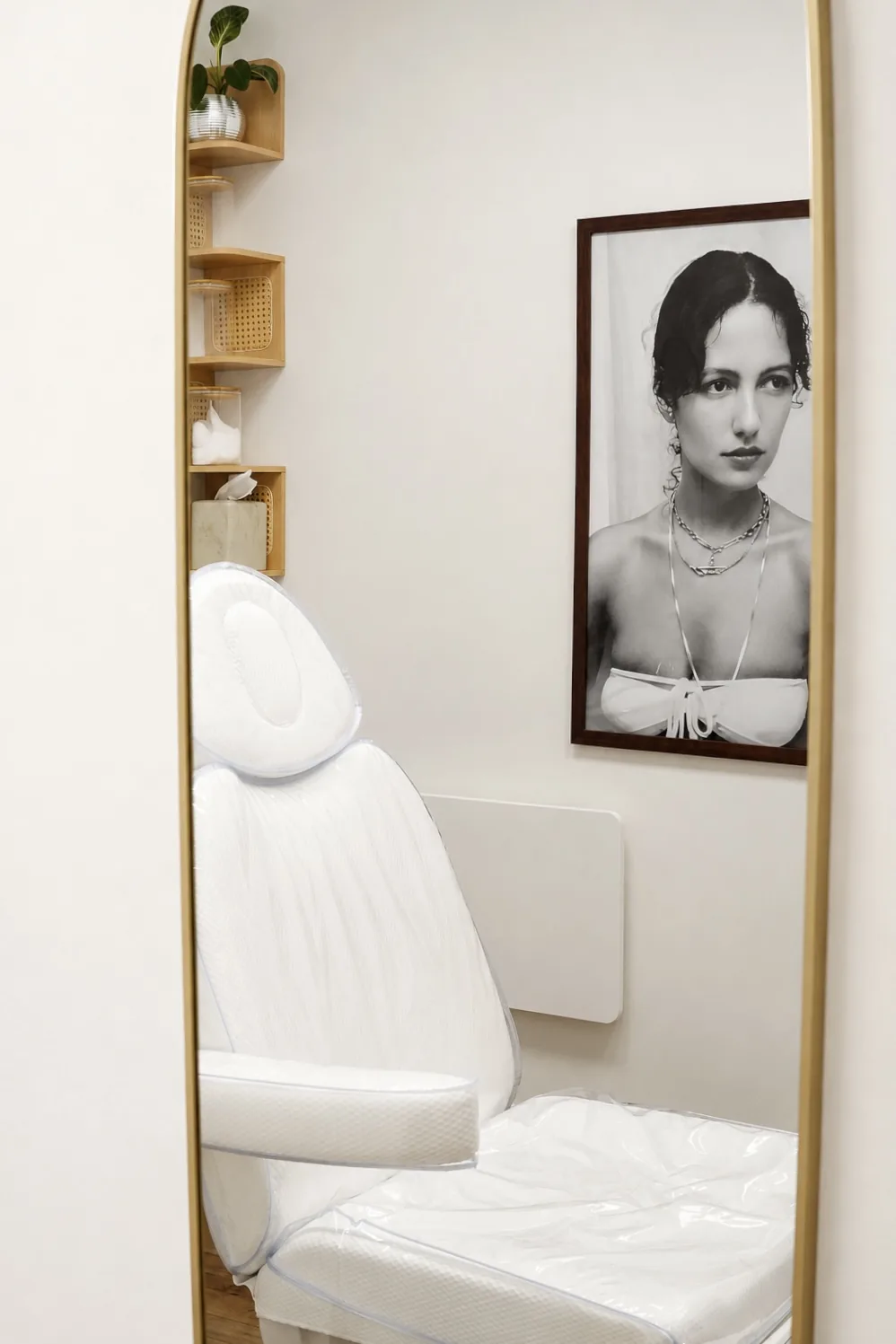
Our Beverly Hills satellite — Wednesdays only, by appointment, injectables only. Lasers and skin services are at our Calabasas studio.
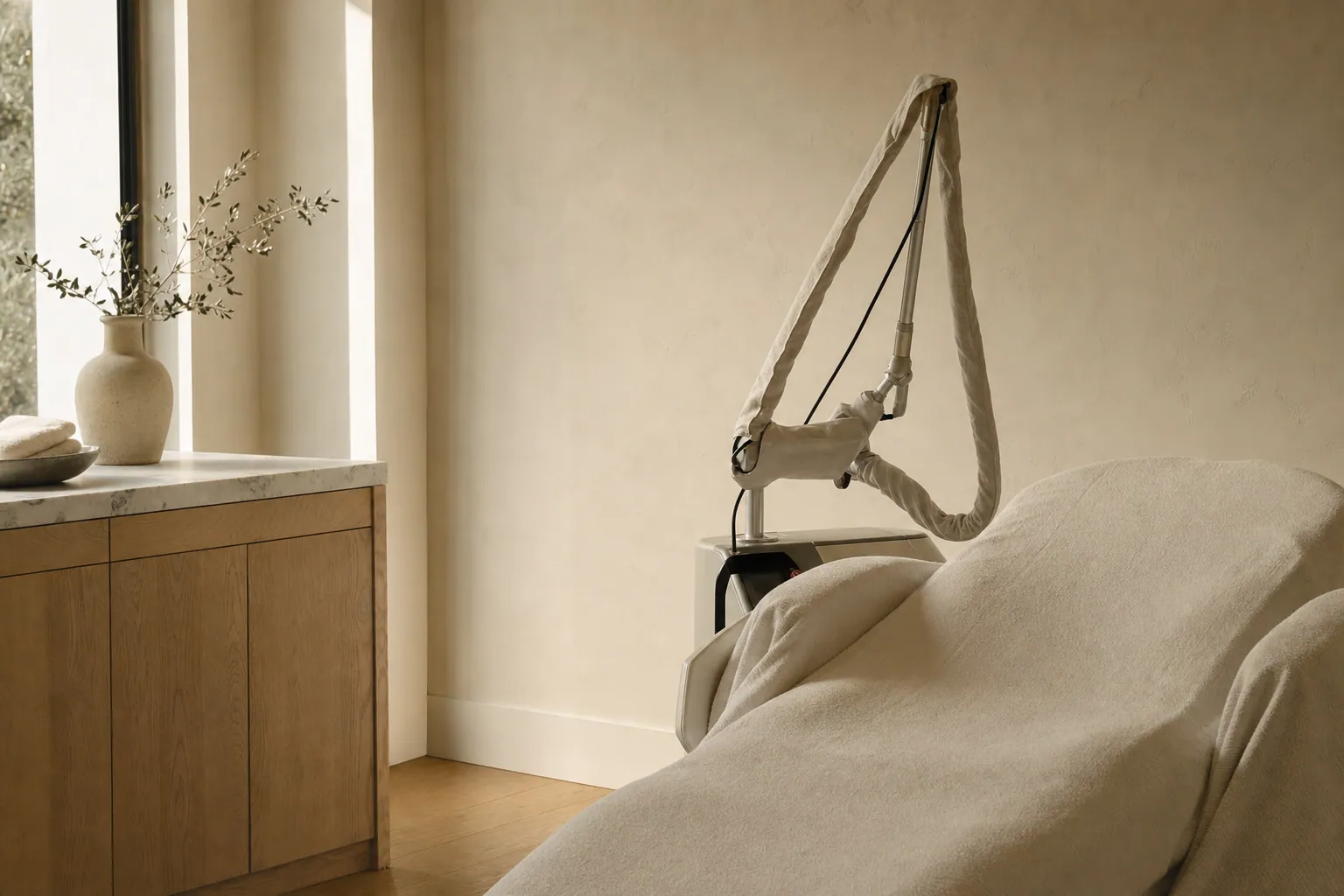
Ablative resurfacing, pigment, vascular, RF, hair removal, tattoo and PMU removal — how we choose by concern, not by device.
Every booking starts with a conversation.
“They're truly my one-stop shop for everything beauty and skincare. The entire team is so knowledgeable, honest, and always ready to help…”