Semaglutide (Ozempic, Wegovy).
Dosing schedule, week-by-week expectations, side-effect timeline, food strategies during titration, the Wegovy vs Ozempic distinction.

Semaglutide is the molecule. Ozempic is the brand name FDA-approved for type 2 diabetes; Wegovy is the same molecule, different dosing label, FDA-approved for chronic weight management. The drug inside the pen is the same in both cases. The label, the maximum dose, the price, and the insurance coverage are different — and those differences matter clinically.
Why the brand name actually matters.
Semaglutide was approved for type 2 diabetes in 2017 under the brand Ozempic. The weight-management label — Wegovy — followed in 2021, after trials showed sustained weight reduction in non-diabetic patients with obesity or weight-related comorbidities.
The molecule is the same. The administration is the same. The mechanism is the same. What's different is the FDA-approved indication, the maximum labeled dose (Wegovy goes higher), and the insurance landscape — type 2 diabetes coverage is generally broader than weight-management coverage.
We name the distinction because patients sometimes arrive having heard one brand and assuming it's a different drug. It isn't. The honest framing is: this is semaglutide, and the brand name on the box reflects how the FDA has approved its use, not the chemistry. The label split carries practical consequences for dose and coverage — the Wegovy vs Ozempic guide walks them brand by brand.
The standard titration, weeks 1 to 20.
Both Ozempic and Wegovy share a stepwise dose increase every four weeks. Many patients don't reach the highest dose; we titrate to clinical effect, not to label maximum.
| Weeks | Dose | What to expect |
|---|---|---|
| 1 – 4 | 0.25 mg weekly | Sub-therapeutic; the GI system adjusts. Modest appetite change. |
| 5 – 8 | 0.5 mg weekly | First therapeutic dose. Most patients begin to feel meaningful satiety changes. |
| 9 – 12 | 1.0 mg weekly | Common maintenance dose for many patients. Often where the curve flattens. |
| 13 – 16 | 1.7 mg weekly | Wegovy-labeled escalation. Optional based on response and tolerability. |
| 17 – 20+ | 2.4 mg weekly | Wegovy maximum. Held as maintenance for patients who tolerate it and benefit from the higher dose. |
What the first weeks usually feel like.
The most reliable pattern is that gastrointestinal symptoms appear in the first one to three days after each dose increase, peak within a week, and then settle. Nausea is the most common; early fullness, constipation, and occasionally reflux follow — the GLP-1 side-effects guide covers the full class-wide picture.
The single most useful intervention is a slower titration. If a dose step produces side effects that interfere with daily life, we hold at the prior dose for an extra month before stepping up. Faster titration doesn't get you to results faster — it gets you off the medication faster.
Hydration matters. Constipation responds to fiber and water before it responds to anything else. Smaller meals work better than the meals you used to eat shrunken down — protein-forward, lower-fat, slower.

Food strategies that actually help.
Patients who do well during titration tend to prioritize protein first at every meal — eggs, yogurt, cottage cheese, fish, chicken — because satiety arrives faster than it used to, and what gets eaten first is what gets eaten. Falling short on protein during rapid weight reduction is a common cause of muscle loss and fatigue.
High-fat meals delay gastric emptying further, which can stack on top of the medication's effect and produce uncomfortable fullness or reflux. We aren't anti-fat — we're saying that a high-fat meal at the wrong moment of the titration is a recipe for a bad afternoon.
Alcohol tolerance often drops. The medication slows gastric emptying, alcohol absorbs differently, and the next-day effect can be more pronounced than expected. We tell patients this in advance, not as a warning, but as information.
On expectation"The first eight weeks aren't about the scale. They're about confirming the medication is well-tolerated and that we've found a starting dose your body can hold."
- Persistent severe nausea or vomiting unresponsive to dose adjustment.
- Signs of pancreatitis (severe abdominal pain radiating to the back) — immediate discontinuation and evaluation.
- Pregnancy, attempt to conceive, or breastfeeding — therapy stops; we plan the timeline together.
- Surgery requiring general anesthesia — typically held for one to two weeks pre-operatively given gastric-emptying considerations.
- Inadequate response after a reasonable trial at therapeutic dose — we may switch molecules rather than continue.
How much does semaglutide cost in Los Angeles?
Semaglutide (Ozempic, Wegovy) in Los Angeles typically ranges from $300 to $1,000 per month, depending on dose, formulation source, and whether insurance coverage applies. Cash-pay programs at LA medical spas commonly land $400 to $800 per month at therapeutic doses. Compounded semaglutide programs run lower, $300 to $500 per month, though sourcing and clinical oversight vary significantly.
What moves the monthly semaglutide price.
Dose is the primary cost driver. Patients on starting doses (0.25 mg, 0.5 mg) use less medication per month than patients on maintenance doses (1.0 mg, 1.7 mg, 2.4 mg). Most cash-pay programs price by month at the labeled dose, with the per-month figure stepping up as the dose ladder climbs. Total monthly cost can roughly double between the starter and maintenance phases.
Source — branded versus compounded — moves the price most significantly. Branded Ozempic and Wegovy are FDA-approved finished products, with manufacturer pricing and pharmacy markup. Compounded semaglutide is prepared by a 503A or 503B compounding pharmacy, available at lower price points but with sourcing, sterility, and labeling differences worth understanding. We won't recommend compounded semaglutide without disclosing the tradeoffs.
Insurance coverage changes everything. Patients with type 2 diabetes coverage for Ozempic often pay $25 to $50 per month with copay assistance. Patients on Wegovy with weight-management coverage similarly benefit when their plan covers GLP-1s. Patients without coverage pay full cash price. Plan-by-plan variability is significant and worth checking before committing to a program.
Clinic markup and program structure account for the remaining spread. Programs that include monthly visits, dose-titration management, side-effect support, and labs typically price higher than mail-order or remote-only models. The premium reflects the clinical oversight, which matters more than patients sometimes assume during titration.
Typical Los Angeles semaglutide ranges.
Per-month pricing including medication and program services. Insurance coverage, when available, can reduce out-of-pocket cost substantially.
| Variant | What's included | Typical LA range |
|---|---|---|
| Branded Wegovy / Ozempic (cash pay) | FDA-approved manufactured drug, all doses, full pharmacy supply chain. | $650 – $1,000 per month |
| Branded with insurance coverage | Covered prescription with copay assistance, when plan includes GLP-1 weight management. | $25 – $200 per month |
| Compounded semaglutide program | Compounded prep from a 503A or 503B pharmacy; lower price, additional tradeoffs. | $300 – $500 per month |
| Initial consultation + intake | Medical history, labs (often AST/ALT, A1c, lipid panel, TSH), candidacy assessment. | $200 – $500 one-time |
| Monthly clinical visit | Dose titration, side-effect review, weight check; often bundled into program pricing. | $100 – $200 per visit |
Semaglutide vs tirzepatide vs older weight-loss approaches.
Tirzepatide (Mounjaro, Zepbound) is the closest adjacent option and the most relevant cost comparison. LA cash-pay tirzepatide programs typically run $350 to $1,200 per month — modestly above semaglutide at comparable doses. Trial data show tirzepatide producing roughly 50 percent greater average weight reduction than semaglutide head-to-head. For patients evaluating cost-per-result, tirzepatide's higher monthly cost often delivers more weight change per dollar.
Older oral medications — phentermine, naltrexone-bupropion, orlistat — cost $20 to $150 per month and remain reasonable choices for some patients. Average weight reduction is meaningfully less than GLP-1 therapy. For patients with mild weight goals or contraindications to GLP-1s, the older options retain a place in the cost-effectiveness landscape.
Bariatric surgery is the major surgical alternative at $15,000 to $25,000 for sleeve gastrectomy or gastric bypass. For patients with significant obesity and metabolic disease, surgery may be both more effective and more cost-effective long-term than years of GLP-1 medication. The right tool depends on starting BMI, comorbidities, and goals.
For patients on semaglutide who plateau, switching to tirzepatide is a common next step. The cost increase per month is modest; the response often justifies it. Switching back the other direction (from tirzepatide to semaglutide) is rarer and usually driven by tolerability rather than cost.
How we price semaglutide programs.
Pricing at Swissa Med Spa is determined at consultation, where we evaluate candidacy, labs, and discuss source options. The monthly program cost is shared in writing before initiation, with dose escalations and program adjustments handled at scheduled visits — not as billable surprises.
Supervised by Dr. Charles Peterson, board-certified physician with nearly a decade in aesthetic medicine.
Semaglutide results.



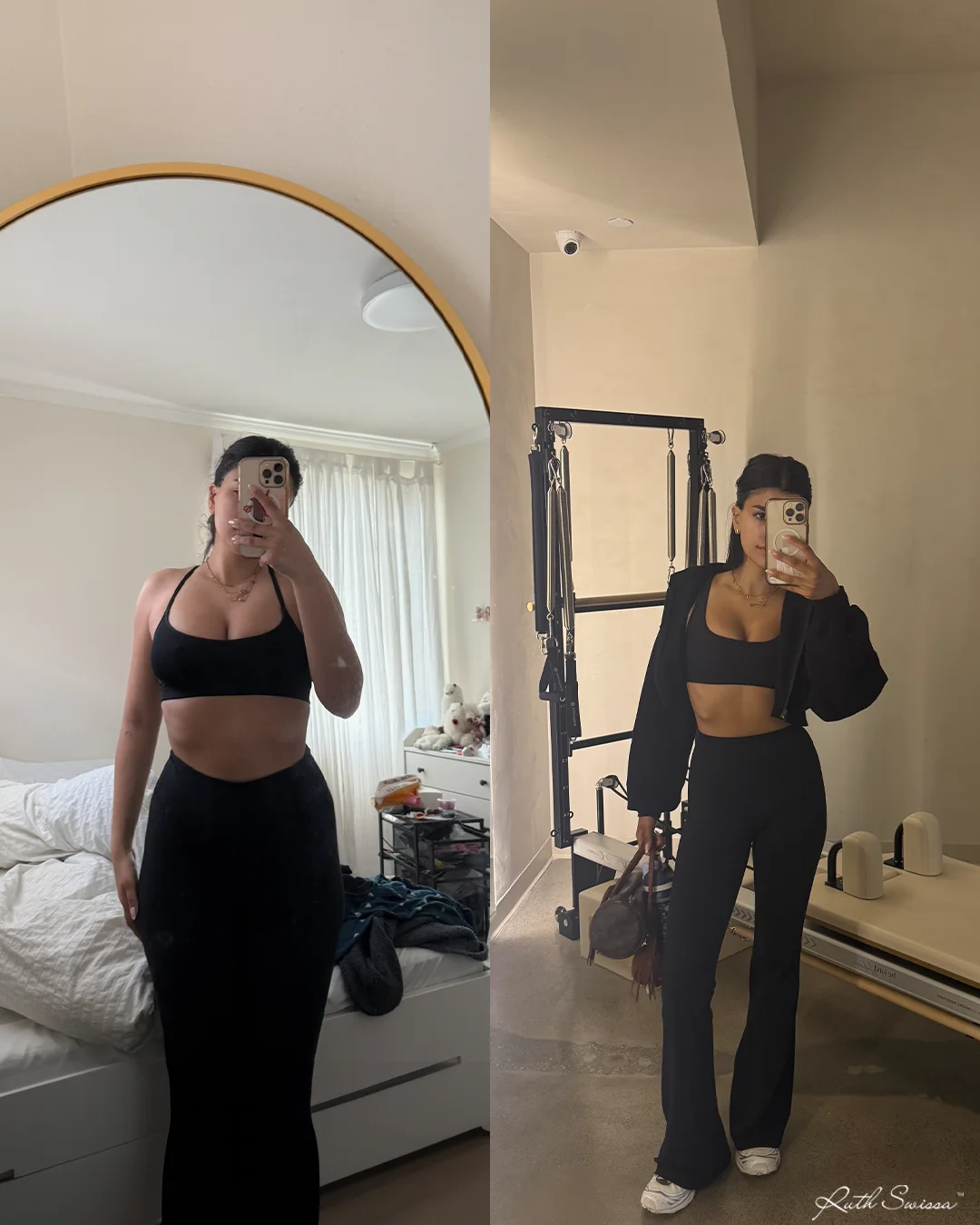
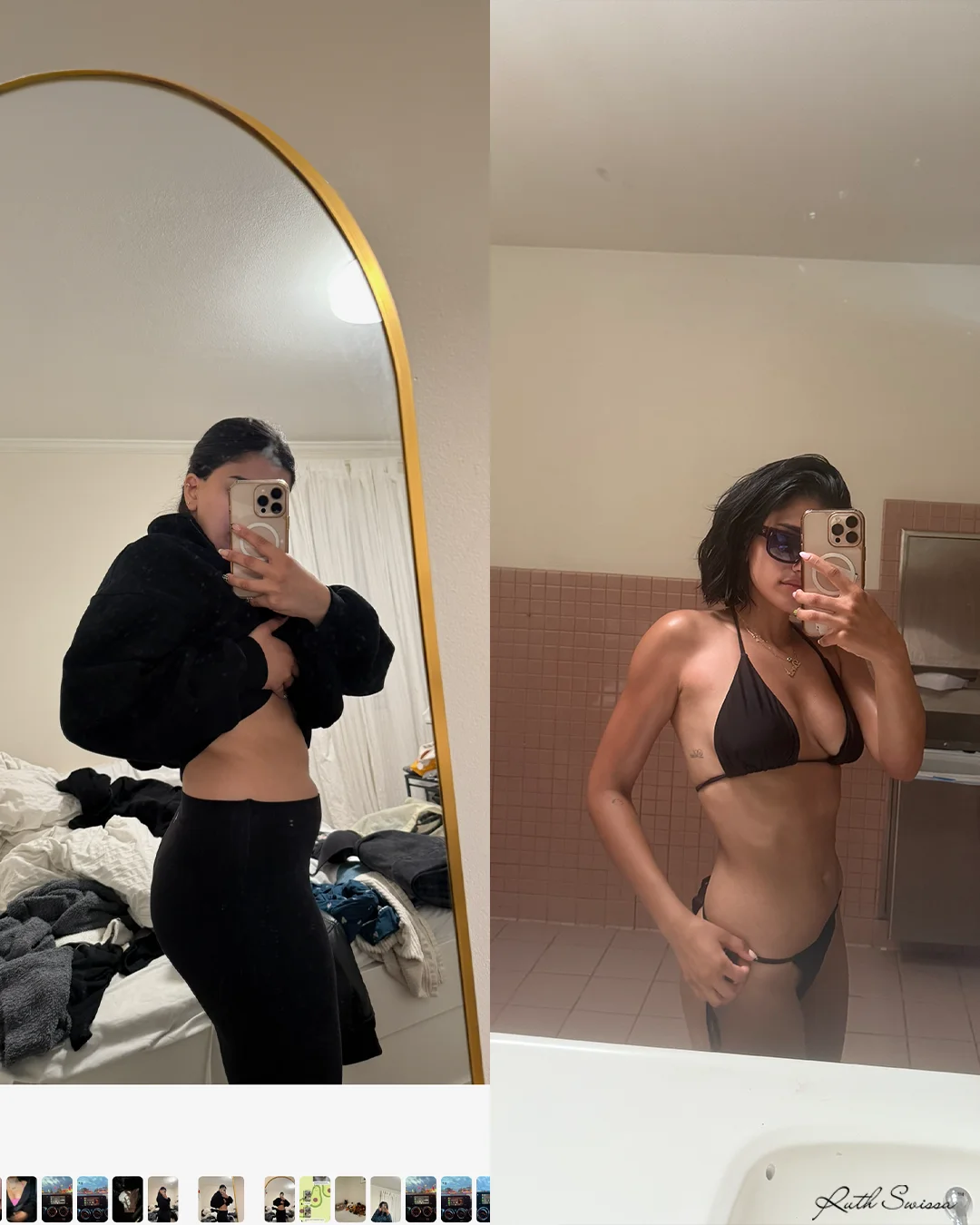
Photographs from the Ruth Swissa studio archive, shared with patient consent. Cases include both semaglutide and tirzepatide patients — the protocol is selected per-patient at intake.
Questions we get.
Is Wegovy better than Ozempic?
It's the same molecule. Wegovy carries the FDA-approved weight-management label and a higher labeled maximum dose. For weight management without diabetes, Wegovy is the on-label choice. Coverage and access often dictate which brand we use in practice.
Can I drink alcohol on semaglutide?
Many patients find their tolerance has changed — they get more effect from less, and the next-day feels worse. We don't prohibit it; we tell you what to expect so you can plan.
How much does semaglutide cost in Los Angeles?
Cash-pay branded semaglutide (Ozempic, Wegovy) in LA typically runs $650 to $1,000 per month at therapeutic doses. With insurance coverage, copays often range $25 to $200 per month. Compounded semaglutide programs run $300 to $500 per month with additional sourcing tradeoffs. Initial consultation and labs are an additional $200 to $500 one-time.
Does insurance cover semaglutide for weight loss?
Coverage is improving but inconsistent. Ozempic for type 2 diabetes is broadly covered. Wegovy for weight management depends heavily on the specific plan. We can help you understand your benefits before committing to a cash-pay program.
How fast will I lose weight?
Published trials show most reduction occurs between weeks 12 and 52, with the curve flattening after that. Patients who expect weekly progress on the scale in month one are usually disappointed; patients who measure quarterly are usually surprised.
What if I miss a dose?
If it's within five days of the scheduled dose, take it as soon as you remember. If it's been longer, skip the missed dose and resume at the next scheduled time. Don't double up.
Is compounded semaglutide cheaper than branded?
Yes, typically $300 to $500 per month versus $650 to $1,000 for branded Wegovy or Ozempic. The lower price comes with sourcing and labeling tradeoffs we discuss in detail at consultation. We don't recommend compounded options without making the tradeoffs explicit.
Continue.

GLP-1 mechanism, on-label vs off-label use, candidacy, side-effect management, what happens when you stop.

Dual-agonist GLP-1 + GIP mechanism, comparison with semaglutide, the Mounjaro vs Zepbound FDA-label distinction.

Semaglutide vs tirzepatide — mechanism, trial weight-loss percentages, side-effect profiles, cost, and how we choose between them.

Wegovy vs Ozempic — both are semaglutide. The FDA-label split, dose ceilings, insurance implications, and which fits weight management.
Schedule a consultation for semaglutide (ozempic, wegovy).
“… The spa is beautiful, and the staff is welcoming and professional.”